Barely done

We are now in our final hotel after our trolly tour. Btw, I’ve gained a lot of respect for trolly tour guides, and tour guides in general. They store an enormous amount of information and history on the area, in their brain and Miss Donna not only has roots here through her native husband, but seeks out learning more and more to satisfy the endless amount of questions people ask. Hooked to a headset mic, she dropped us off, emptied her trolly and filled it up again with 30 more people then started her story all over again, and again, and again. So pleasant and so friendly. You can tell she loves what she does.
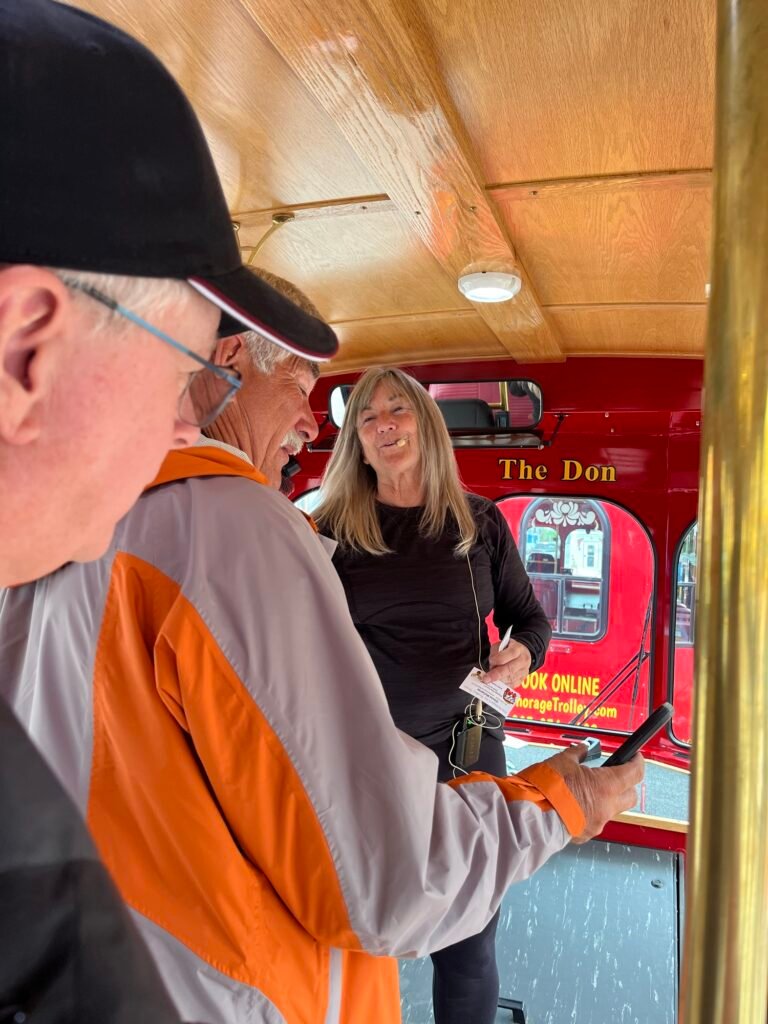
The Don, this is The Don a trolly which was built in Maine. She went there to pick it up and drove it all the way back to Alaska.

While going through Indianapolis she actually drove this trolly on the Indianapolis speedway with two police men in the seats. Can you picture that? A city trolly bus banking the turns on the speedway? Too funny.
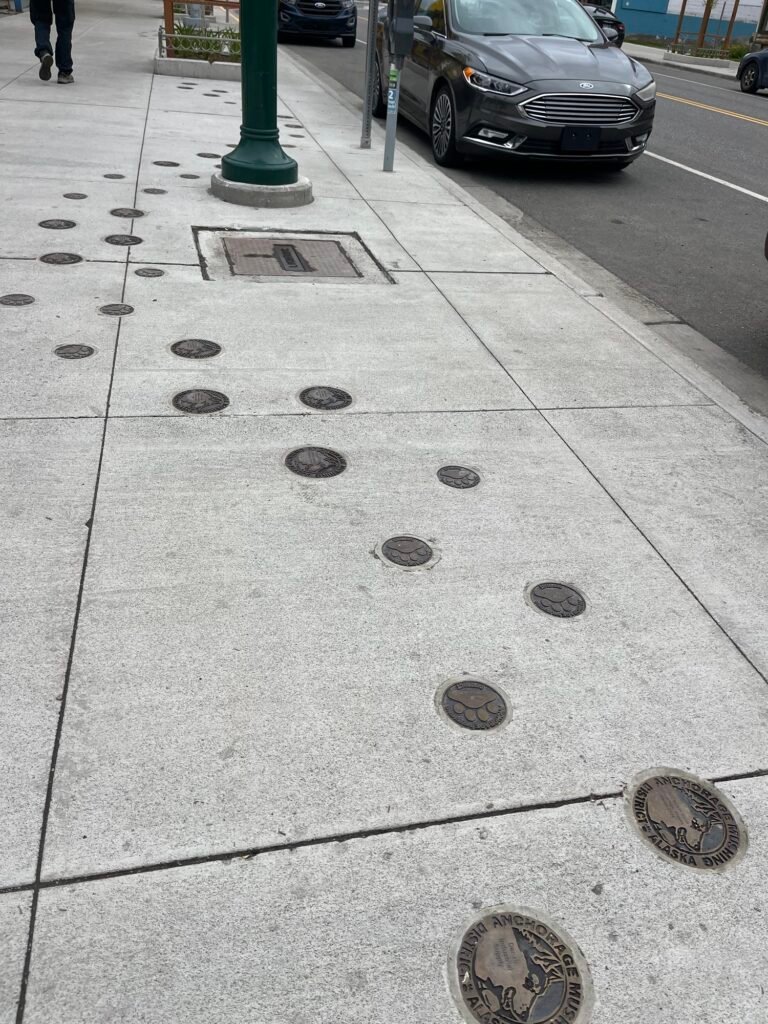
Ode to Togo

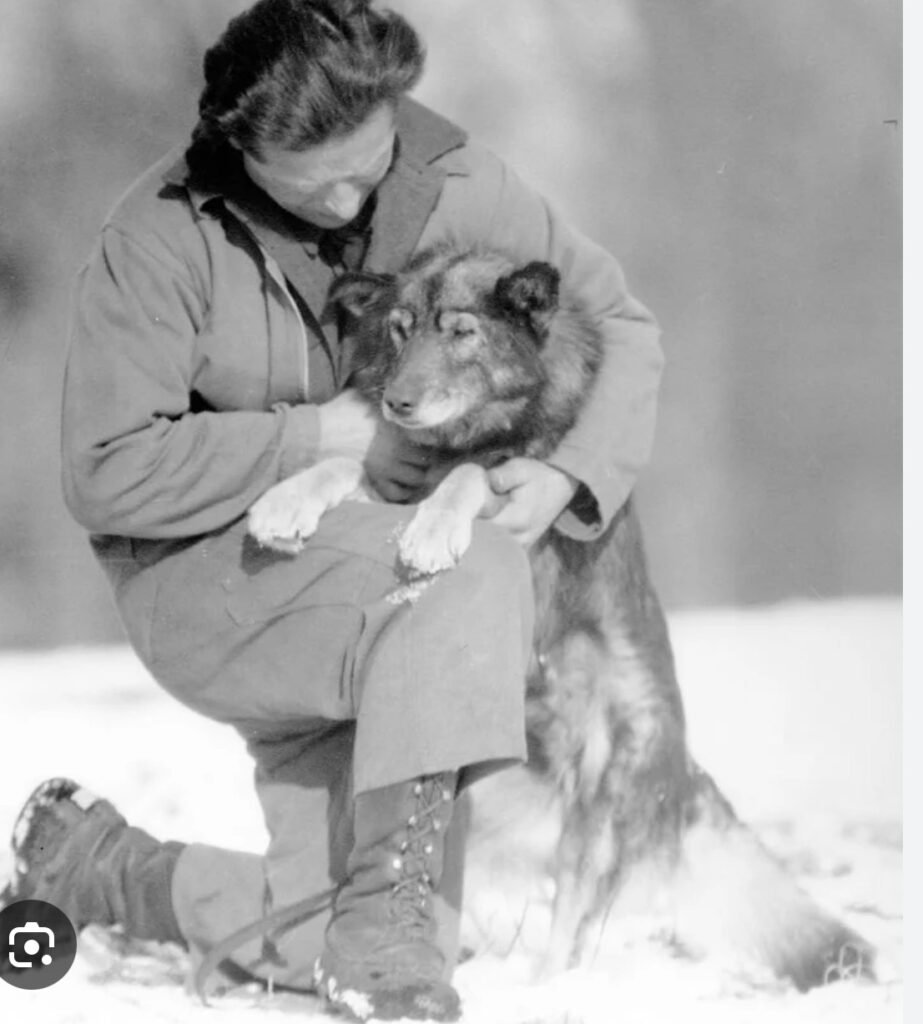
The Iditarod race went through here in Anchorage. Balto is credited with bringing the serum that saved Nome, AK but one of the real hero dogs in an important mission of mercy was Togo. Togo and his musher tag teamed through blizzard conditions and ice breaks nearly loosing all. Togo instinctually knew what to do. It is said this musher, Leonhard Seppala – Born in Norway in 1877 could sleep for three hours increments and Togo knew the way and led his team safely to their destination. Here’s to Togo, Balto and all the people who gave so much to save the children and people of Nome, AK.
This!

According to our tour guide Donna, this is an area where a whole neighborhood slid right into the water.

Earth scientists now recognize that the 1964 Great Alaska Earthquake resulted from plate convergence: where the Pacific Plate is being overridden by the North American Plate, it descends, or subducts, into the Earth’s mantle along the Aleutian Trench. Unlike the San Andres fault where the plates rub each other. The wavy nature of the place we were standing basically turned the dirt in to liquid quicksand.
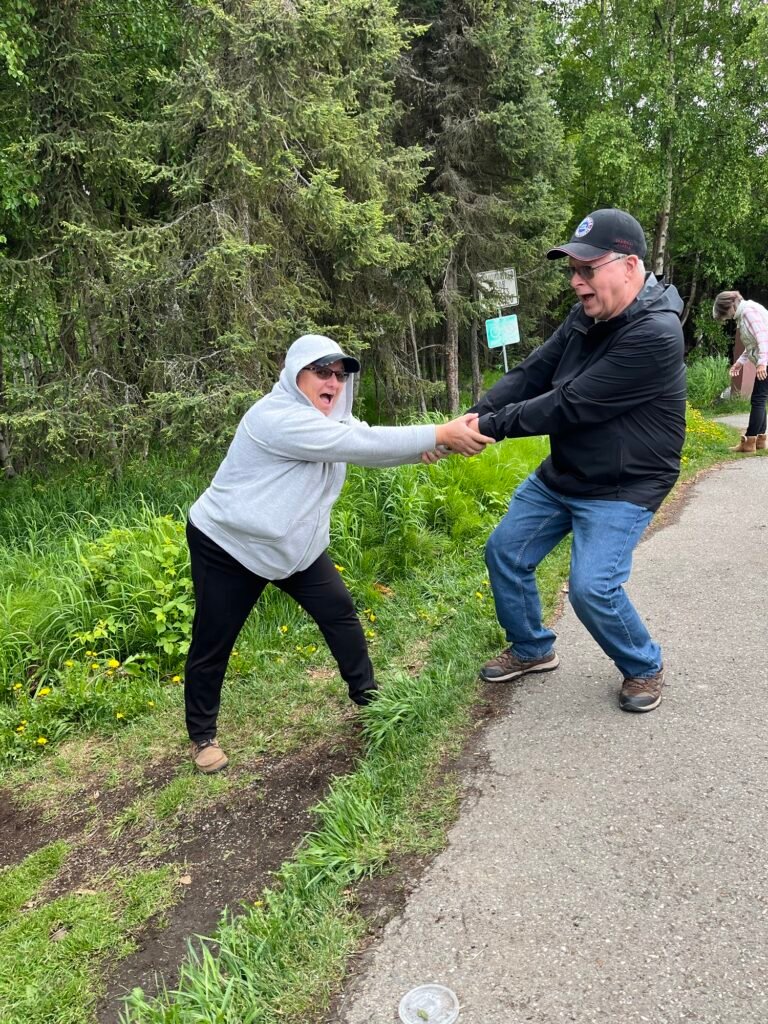
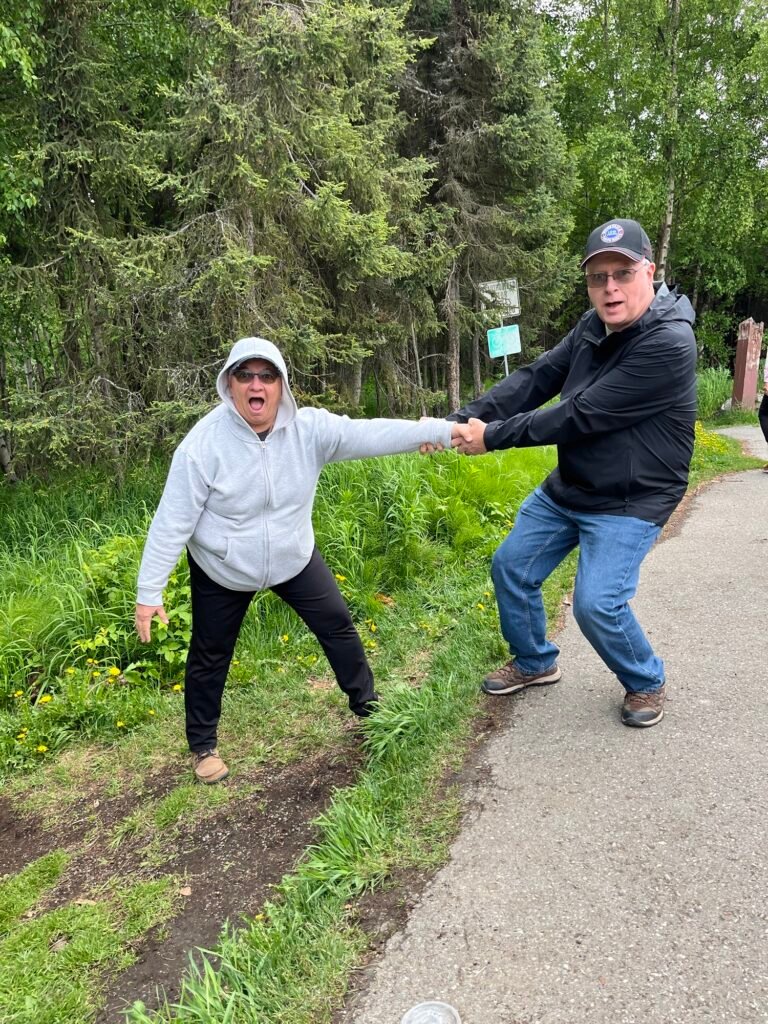
The crack between the plates.

Dan and I are between the two plates here. Donna took pics of all of the riders doing this. I must say, I was a bit uneasy standing there. I have my hood on because Alaska’s state bird is mosquitoes. Donna actually sprayed the air with OFF before we got off the bus. Didn’t help.
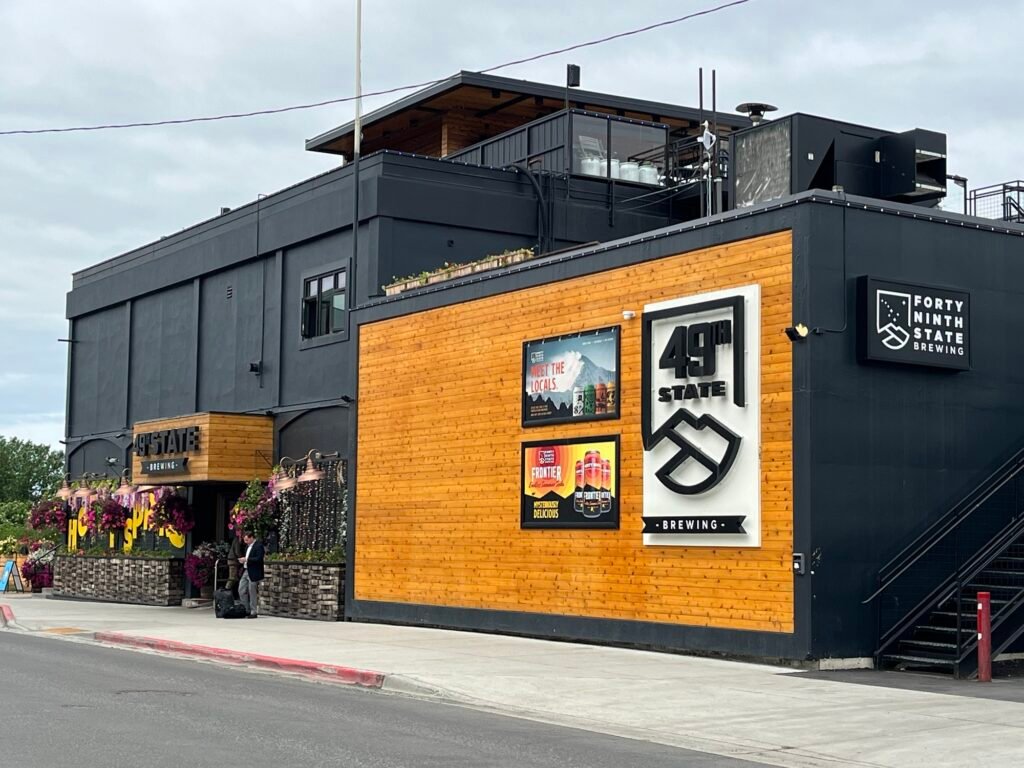
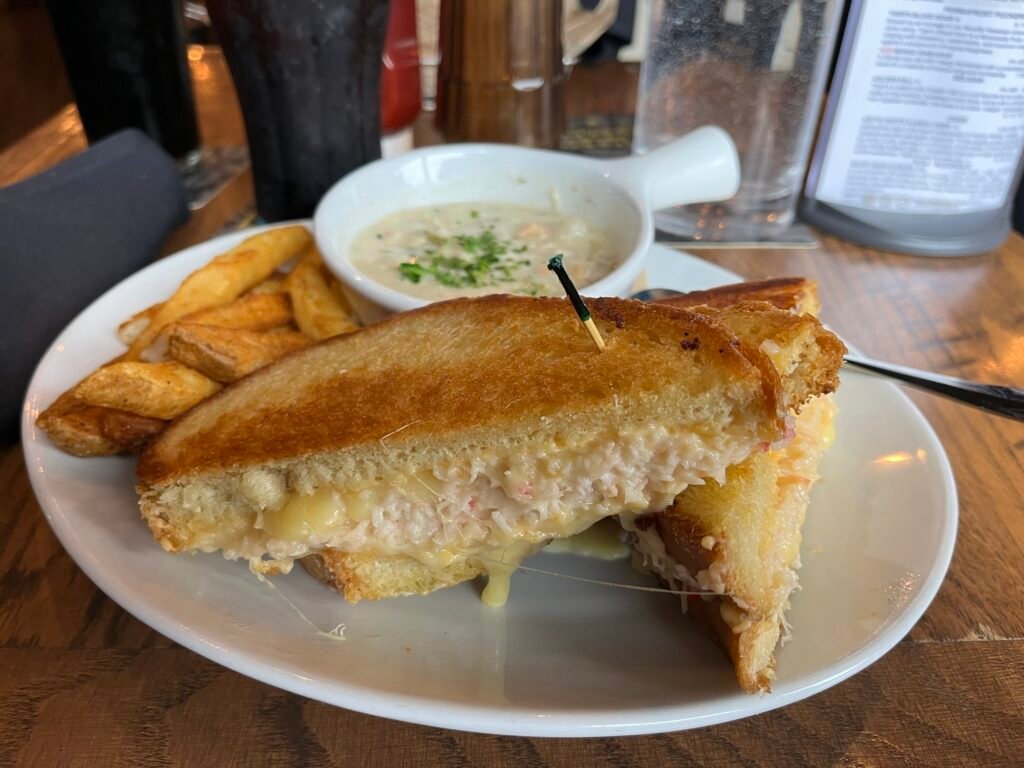
Go inside and get the Crabby Grill cheese
The Crabby Grilled Cheese

Perfect crunch on the bread loaded with crab meat. It was amazing. dmc
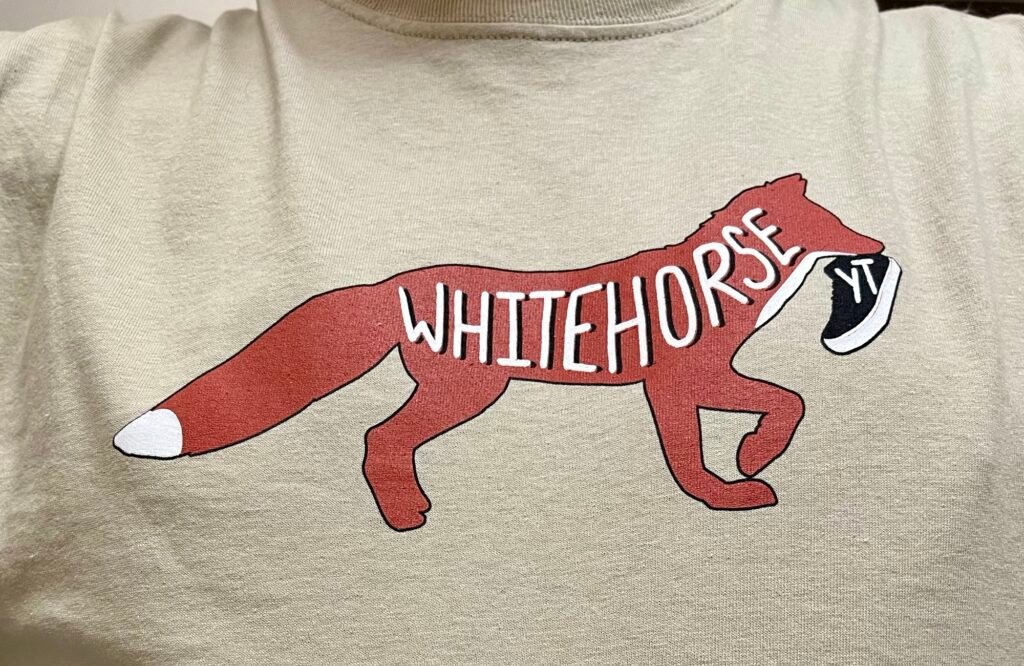
Foxy

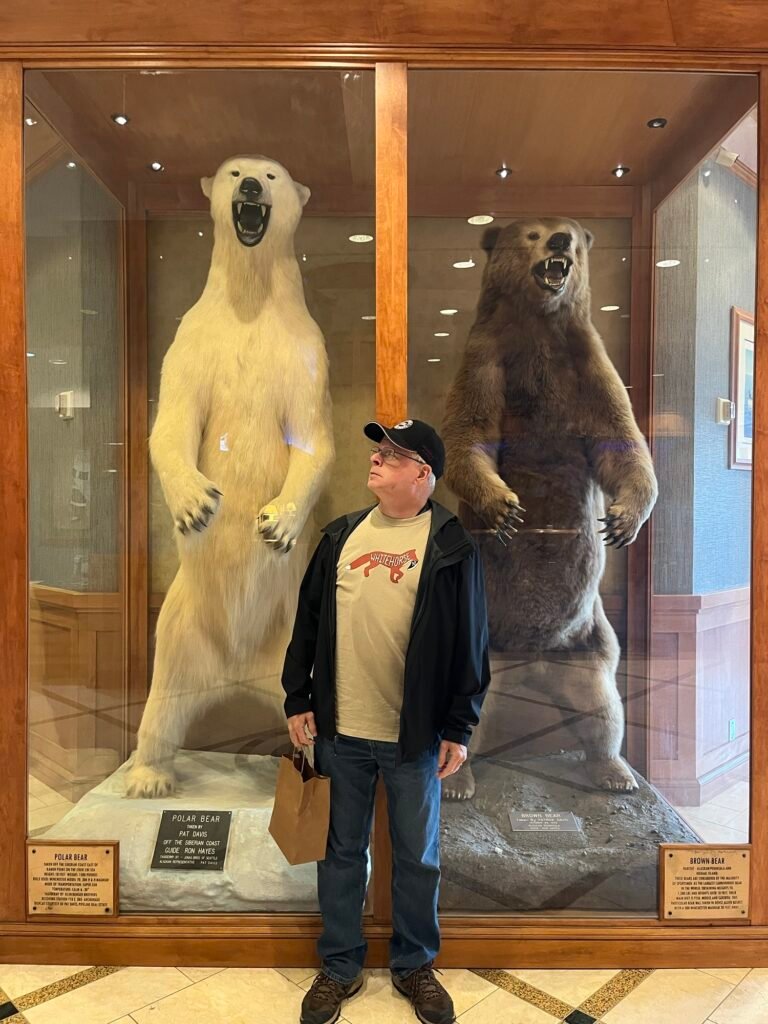
I love foxes, and therefore had to have this t-shirt. But a fox carrying a sneaker? Not as random of a graphic as you think. In the summer of 2018, articles of clothing like boots, towels, gloves, sneakers, left out overnight started disappearing completely or showing up at the other end of town.

The mystery was solved when some hikers noticed random articles of clothing around a fox den in the hills.

Love dem tricksie foxes. 😆

Anchorage Trolley Tour

Keeping things light today, with a two hour trolley tour around the Anchorage area.

Blessed once again with a retired teacher as our tour guide and driver, Donna has at least 17 years (that we can figure) of experience educating visitors about Anchorage. She’s a storehouse of the region’s history and a great storyteller.

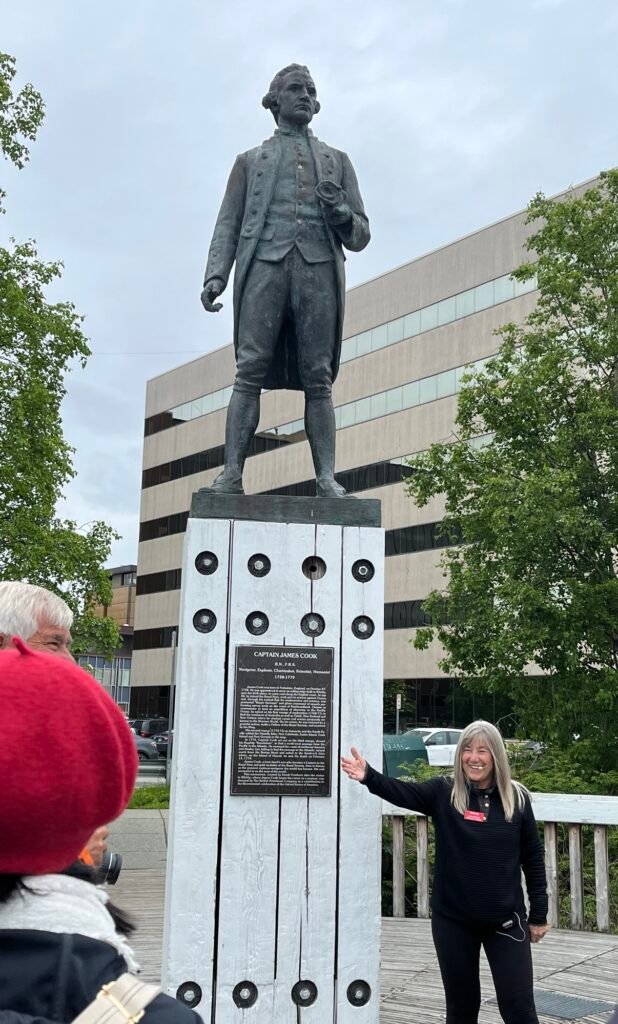
We’re at Captain James Cook Monument. In 1778, this chapter of the great explorer’s adventures had he and his crew looking for the Northwest Passage between the Pacific and Atlantic oceans. They didn’t find it, but the 180 mile long Cook Inlet now bears his name.

At 5:36pm on Good Friday, March 27th 1964, an earthquake hit Anchorage. Estimated at magnitude 9.2 when it let go, about 600 miles of the underlying fault released 500 years of stored energy. It was the second most powerful quake since modern seismology was developed.

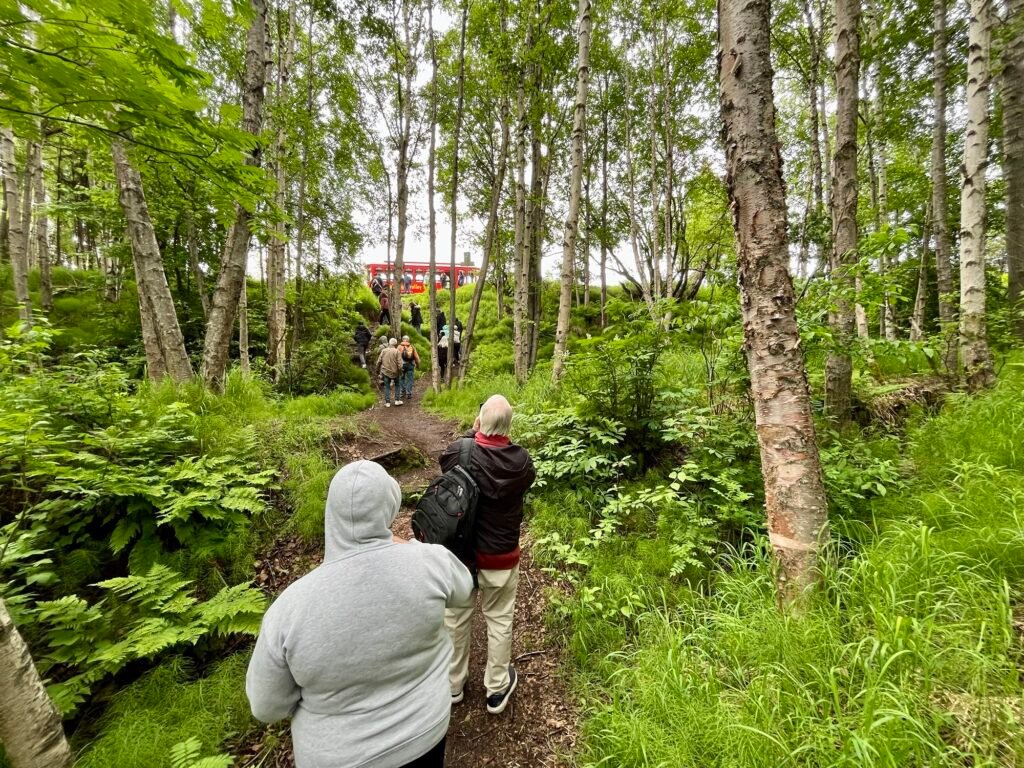
As the nearly 5 minutes of ground/shock waves hammered the region, large areas of land “liquified”, literally sinking whole neighborhoods. We’re standing in one such area in this pic, now about 20 feet below street level. Prior to the quake, there was a large field of grain at the head of the Knik Arm. After, the entire area had liquified and sank, no longer usable farmland.

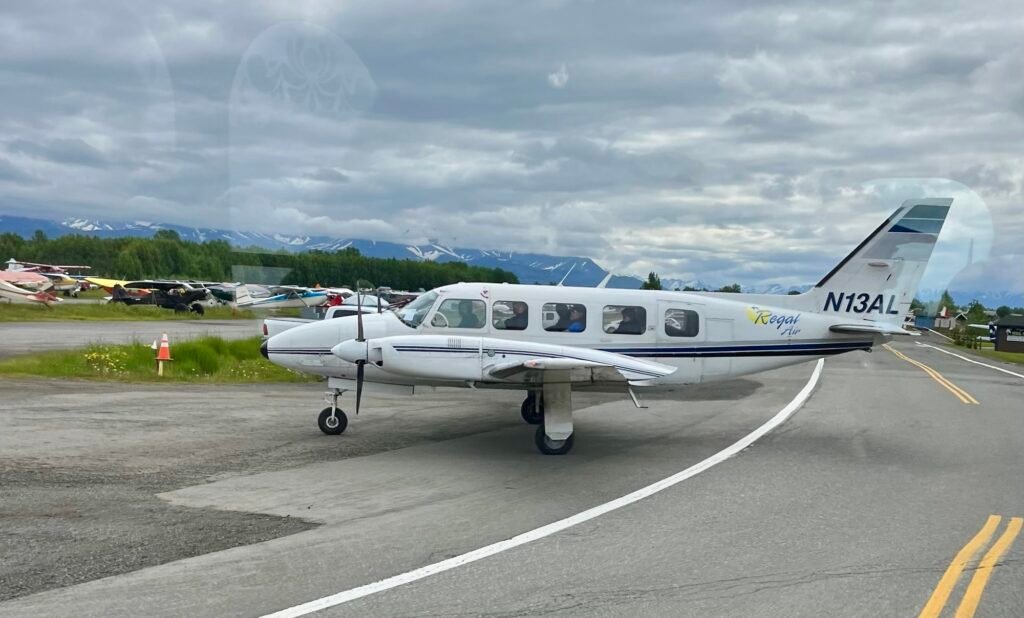
Paraphrasing Buzz Lightyear: Planes! Planes everywhere! General aviation is big here. We’re at Lake Spenard, adjacent to the international airport. Venturing a guess, I’d estimate several hundred small planes are parked here, on land and in boat plane slips.

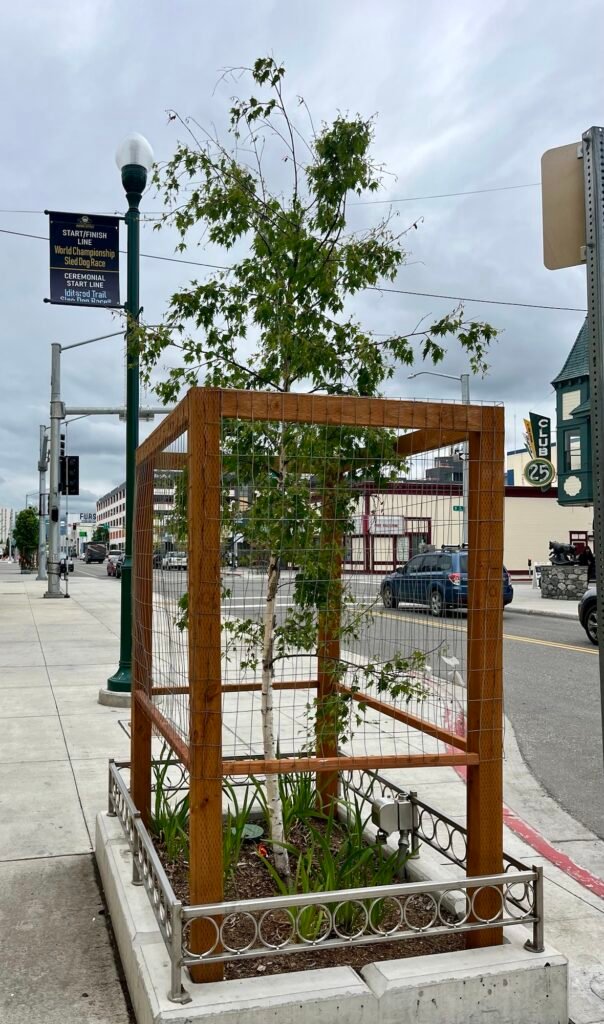
Moosance! In winter, the moose diet leans towards willow trees. They’ll eat the bark from large willows, but devour small trees like this all the way to a stump, wherever they can be found. Like in the city. So, the city builds these cages to discourage grazing there.

Bruce, photo from The Seattle Times

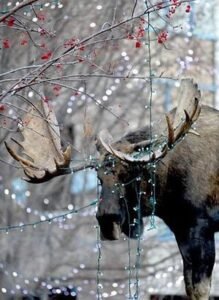
Moose are part of life throughout Alaska. In the early 2000’s, a moose named Bruce frequented resident’s yards in the winter months looking for crab apples, and occasionally left with souvenirs like kid’s swings and Christmas lights tangled in his antlers.

The thing about the crab apples was that by then they had become fermented. So, yeah, like moose aren’t unpredictable enough when they’re sober. Residents even had a website where they tracked this tipsy moose in real time, to predict where he’d show up next. By then, Bruce had a well-earned nickname: Buzzwinkle.

Alaska you win!

Yesterday’s travel on our viewing car was stunning. A two floor car where above gives you panoramic views of wilderness, lakes, vistas, mountains, and wildlife. And below the dining car where you ride thru Alaskas countryside without a care in the world.

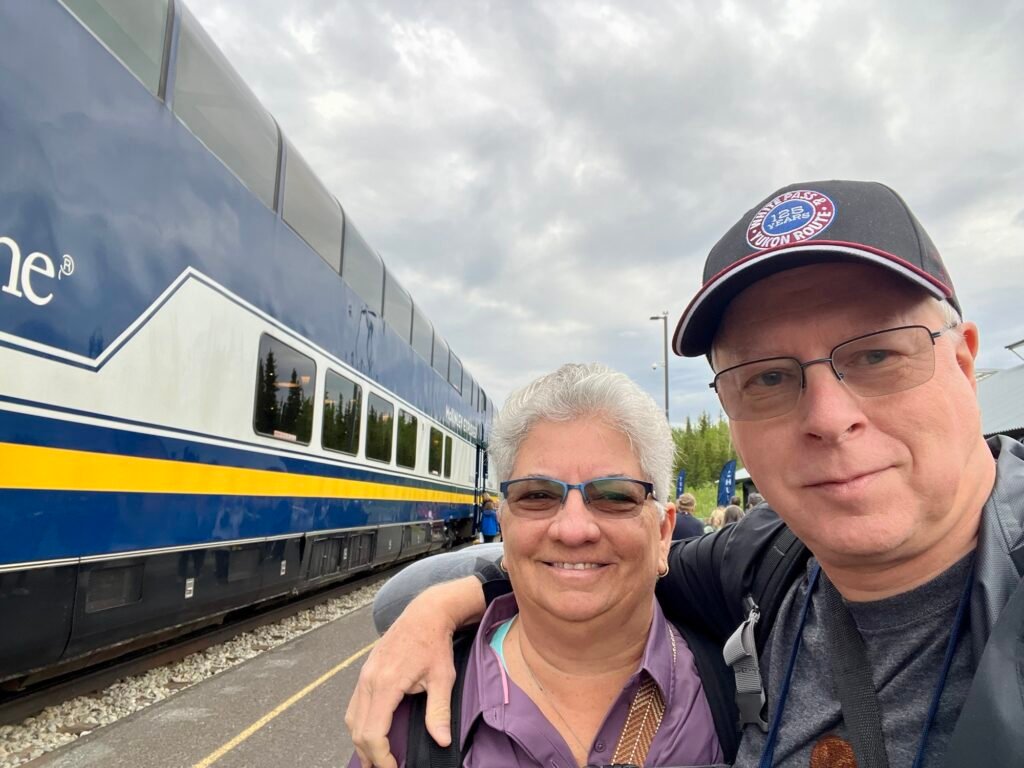
This pic was our goodbye to the train. We’re solo now in Anchorage, AK. Now both with head colds it’ll be nice to sneeze and cough on our own. Lots of people were getting sick by the time Denali came around. Close quarters on coaches, boats, planes and trains, we’ve done them all.

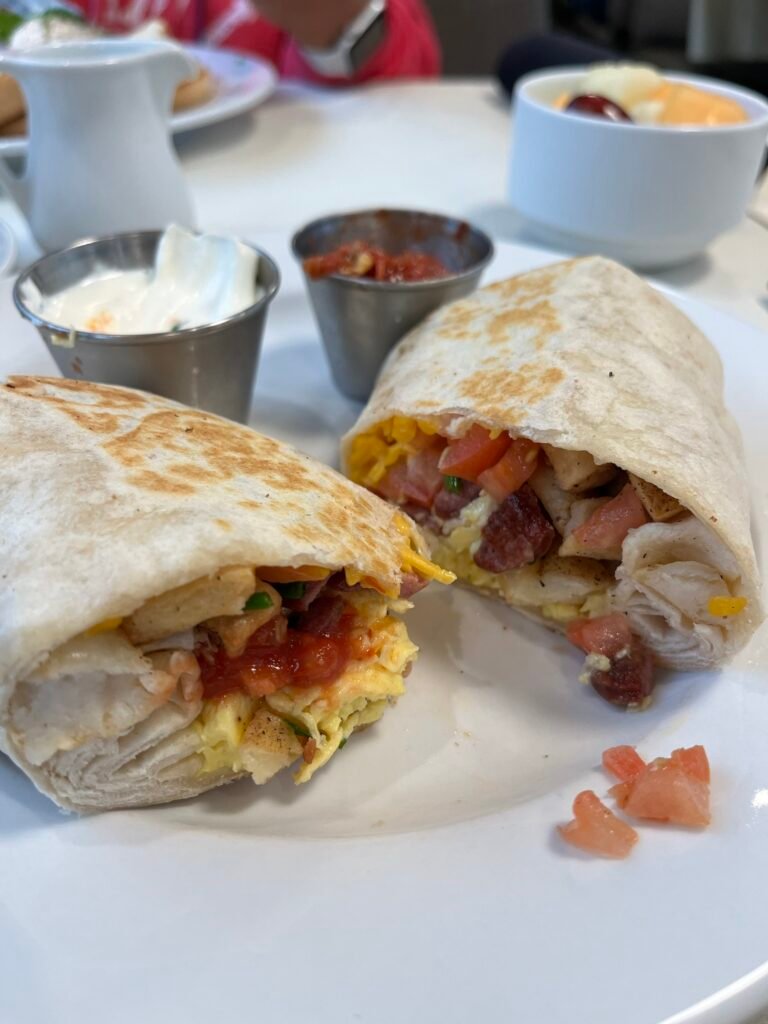
Deer Sausage Breakfast Burrito

Good meals on the train. This burrito tastes like a good smoked sausage. You wouldn’t know.

The train horn thru valleys and neighborhoods resonates and echos.

We get settled into our room after a long day of travel. Turn on the TV and I see travel Alaska channel on. I’m watching this and thinking dang, we’ve barely scratched the surface of what there is to do here. It’s all about nature. The mountains, the wildlife, the sea, the lakes, the glaciers, the weather, and how it affects things. It’s massive, historic, ancient, beautiful, and if you can you must try to see it with your own eyeballs.

I understand how it makes people want to move here. It’s rough and rugged but it takes your breath away.

Man is in the forest. There are times I just shake my head at people. Those with ancient ties here understand respecting the land, the animals, and nature.

The disrespect of things we’ve seen here like in the gold rush was out of control. If you’ve seen it, your head would shake too.

The natives weren’t motivated by gold and riches. It didn’t help them like fur, food, or tools would. In all of this, it seems to come back around to protection and preservation. We are slow to realize that there is only one earth, only one of that species that drop our jaws. Respecting the land and what it gives you can’t be under stated. It’s a delicate balance. Ok, I’m done ranting. I’m part of it too. dmc

Alaska Railroad

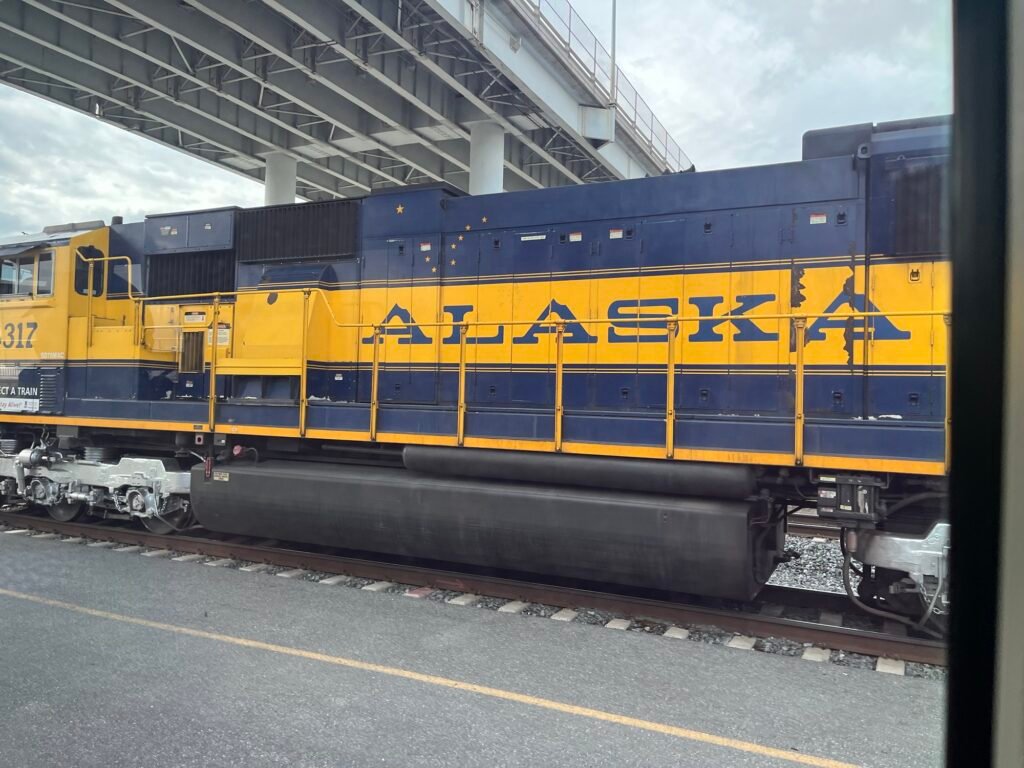
Today is the last day of our guided tour, aboard an Alaska Railroad dining/observation car. This is a nine hour ride from the station in Denali National Park to Anchorage.

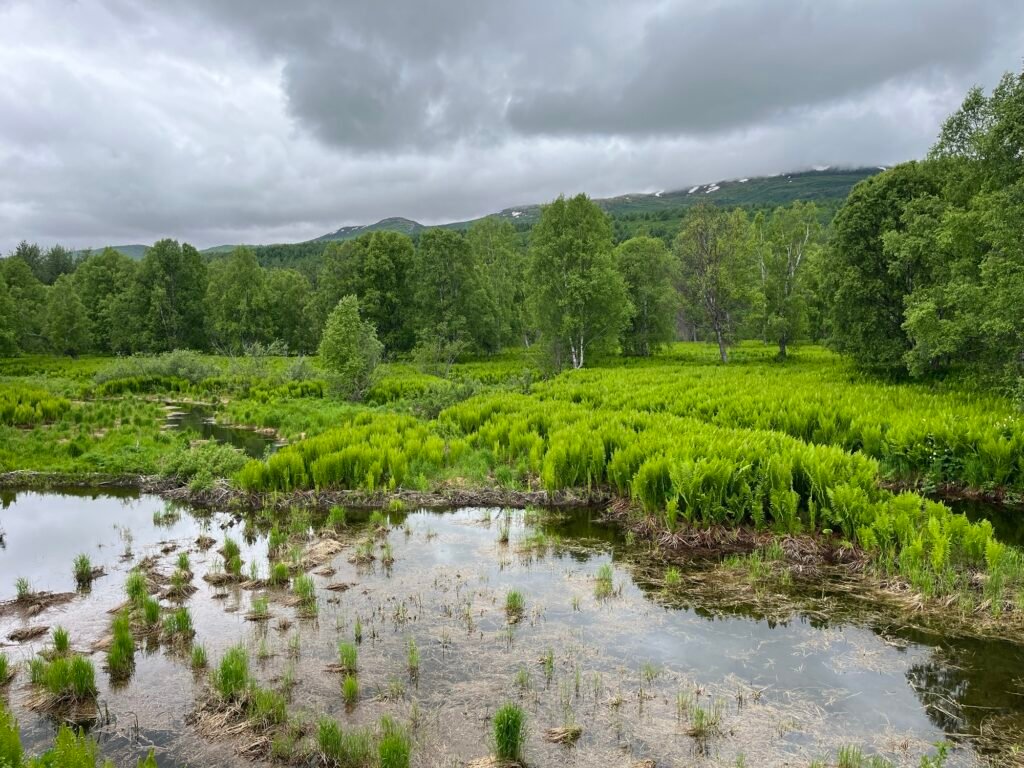
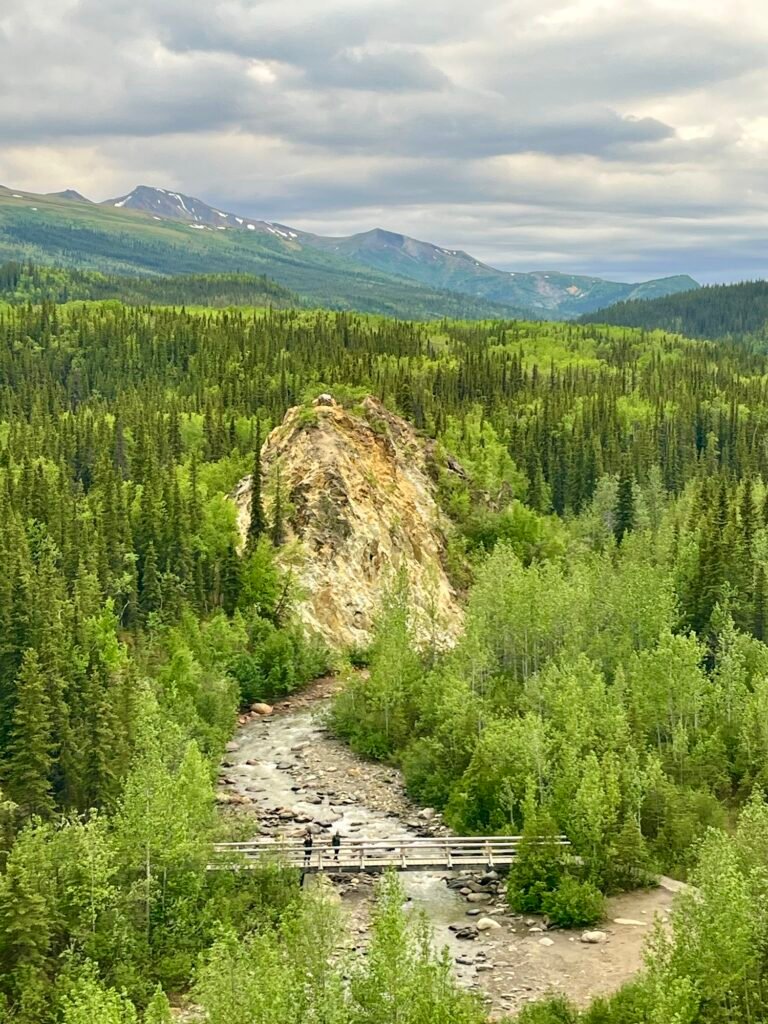
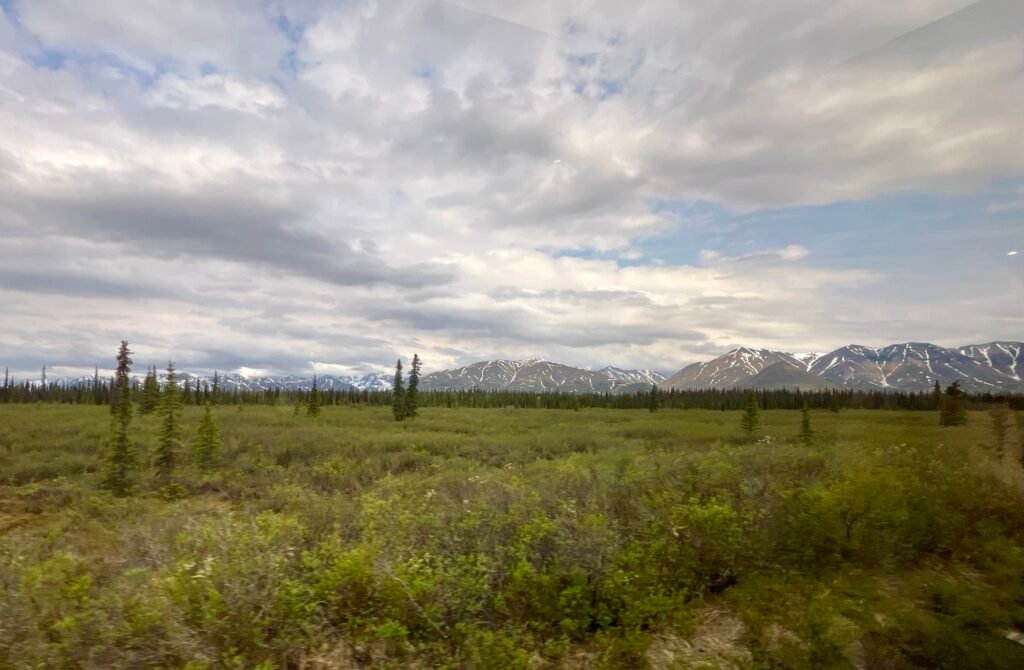
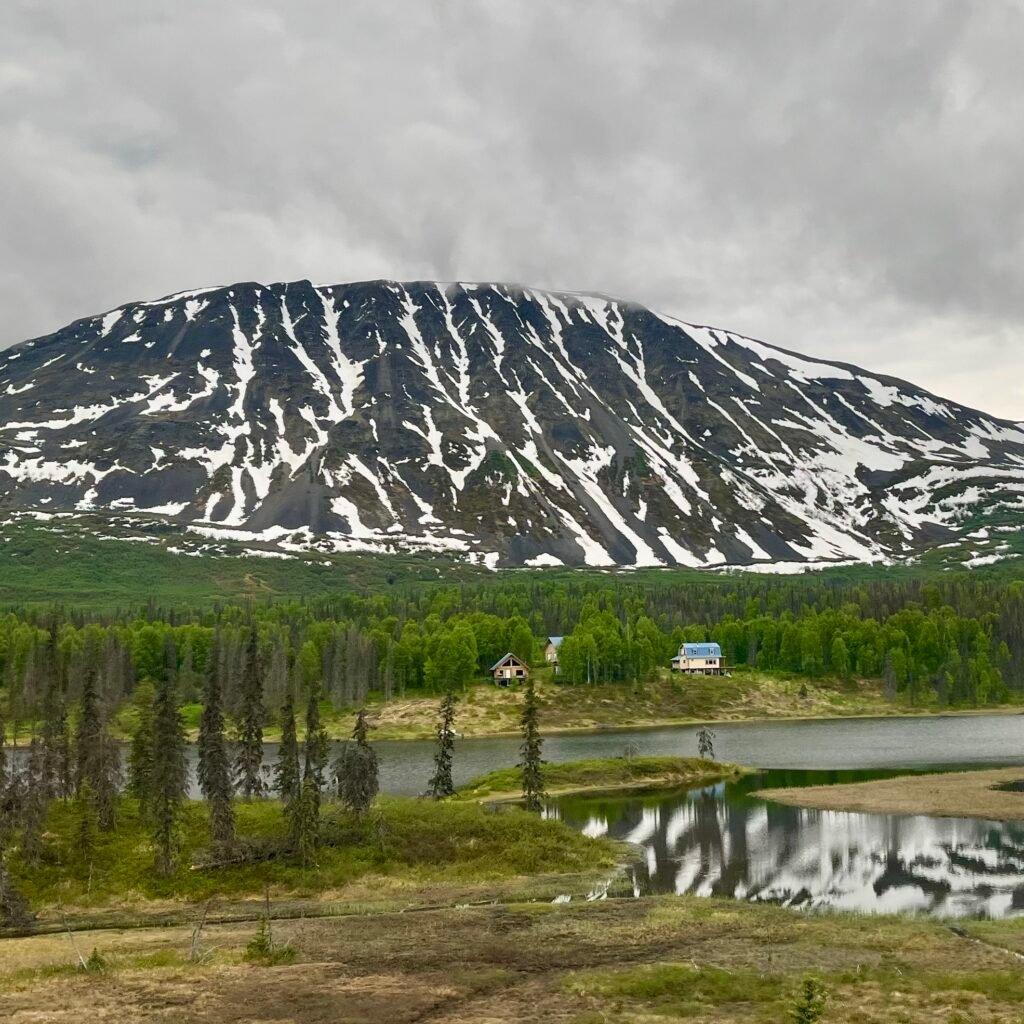
Like yesterday’s views, the landscape is peppered with head-scratching out-of-place outcroppings.

Starting in essentially the same area as yesterday’s tundra tour,

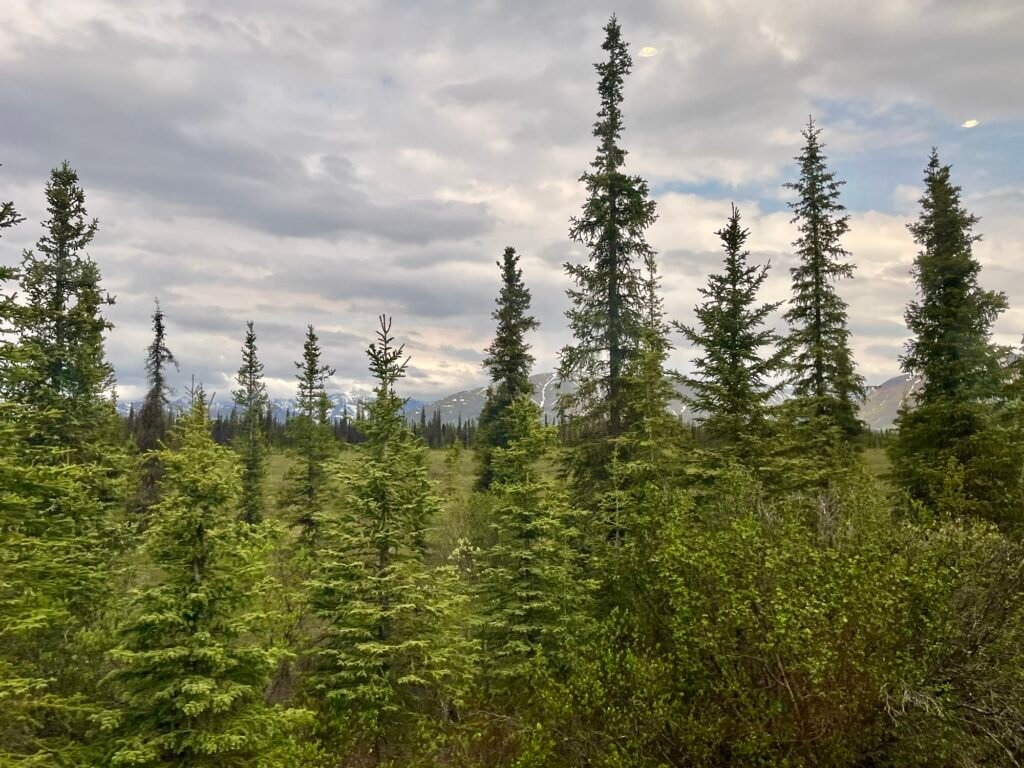
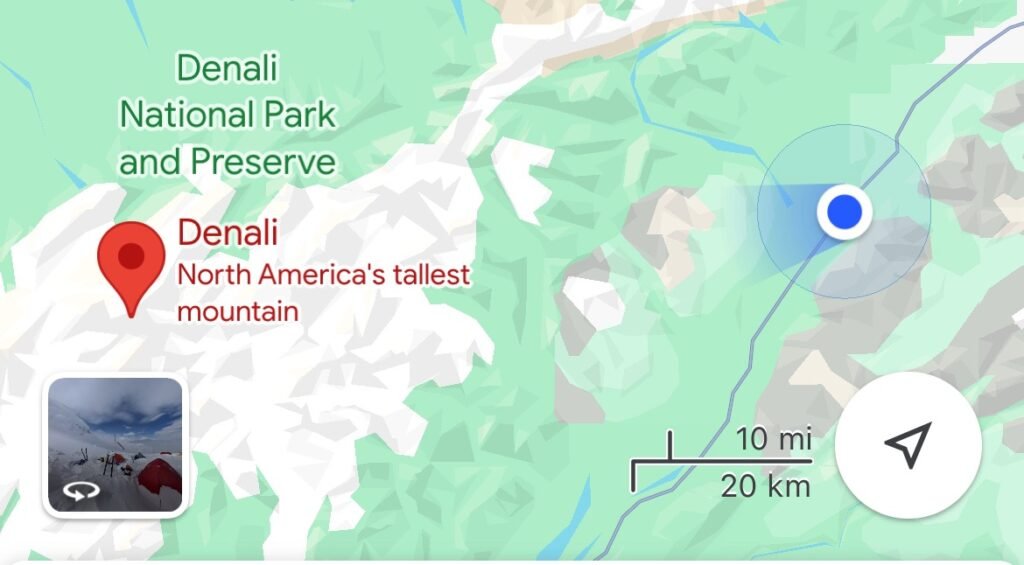
we were hopeful for a Denali sighting as the route would pass about 30 miles to the east.

Alas, not today. For something so massive, Denali is quite shy. Still, the views never disappoint.

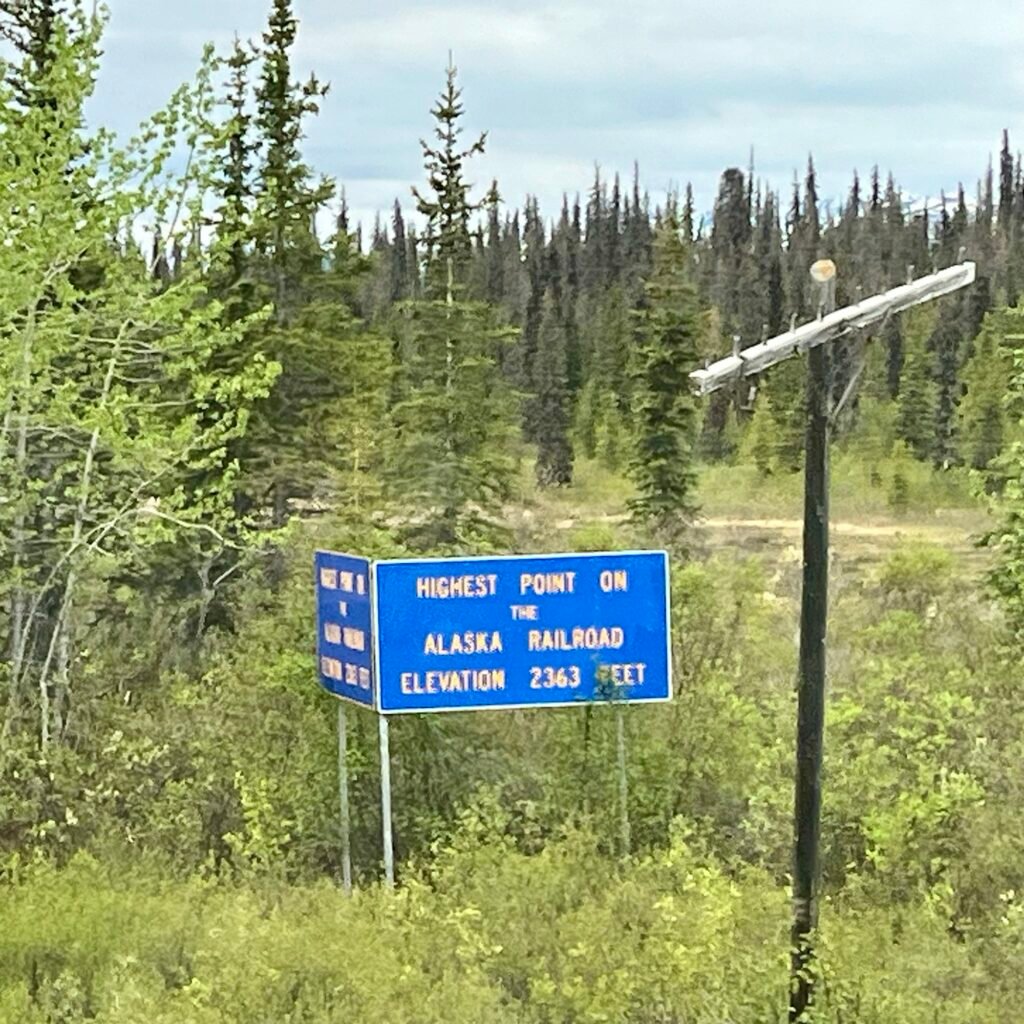
Like the sign says.

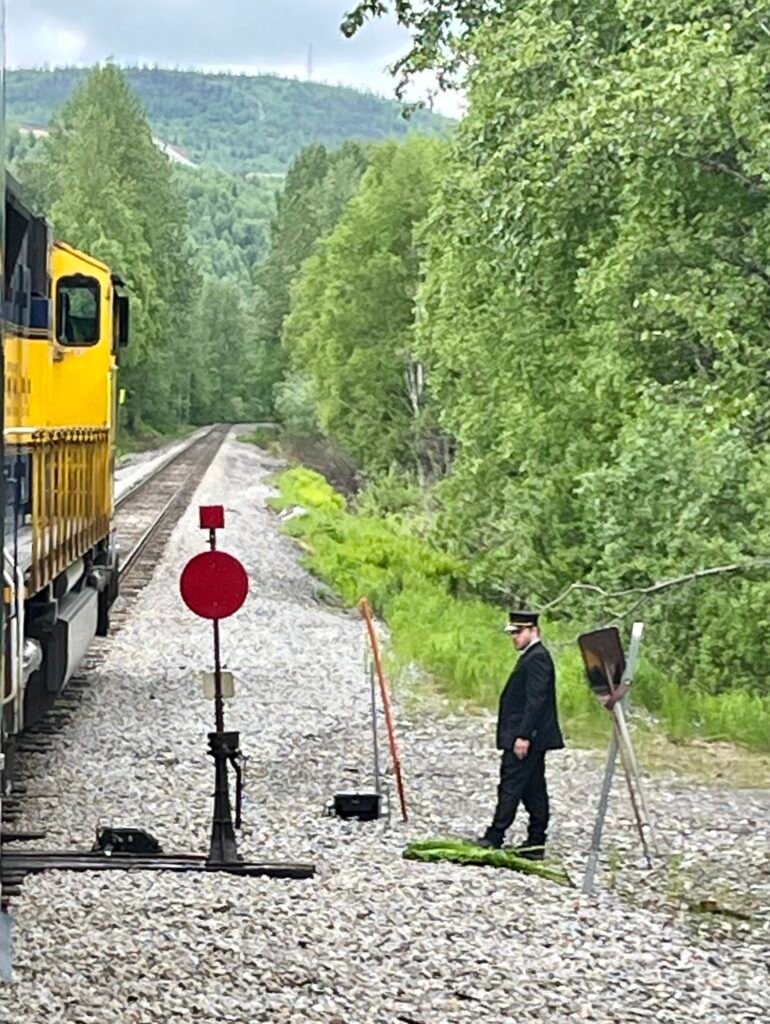
Switchgear in remote areas are manual, not electric. Sometimes in the winter months, the conductor has to use a sledgehammer to clear ice from a switch so it can be flipped.

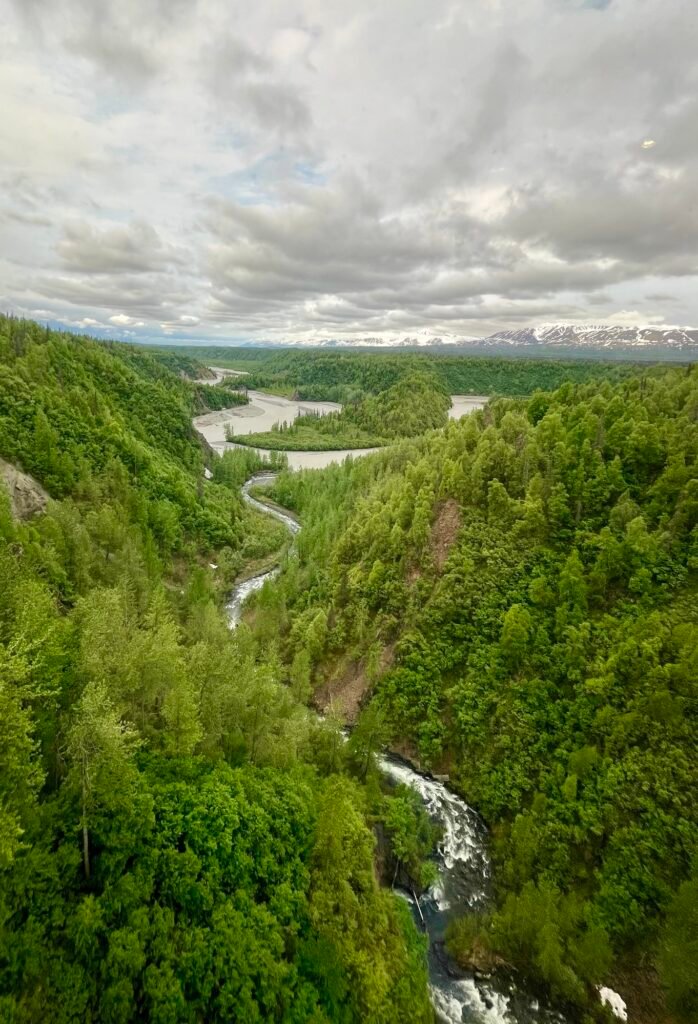
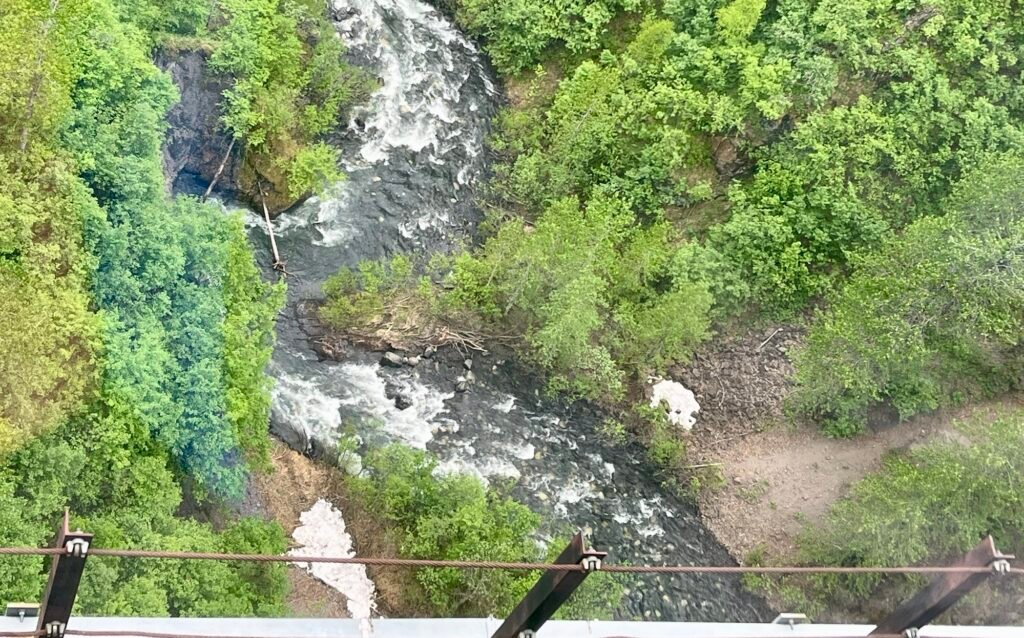
View from the 918’ long Hurricane Gulch Bridge, constructed in 1921 over a mere 90 days. Where our train stopped. For ten minutes. 296 feet above Hurricane Creek.

Did I mention that all 7 cars plus locomotive stopped on this 103 year old bridge 296 feet above the gulch floor for ten minutes? I overheard several pleas of “okay, we need to move now.”

Big Lake. No, really, that’s the lake’s name.

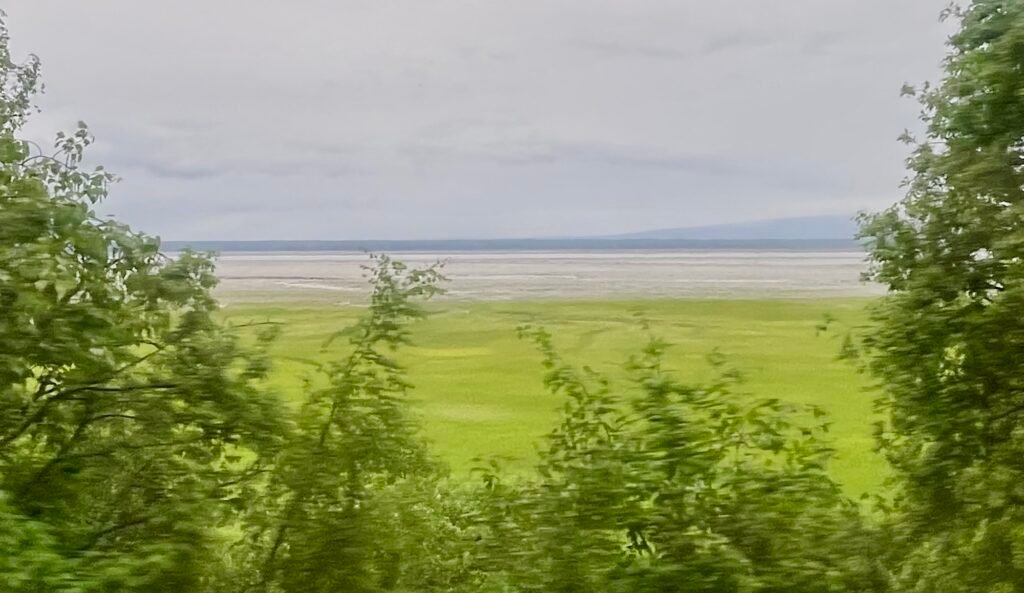
About 20 miles north of Anchorage, looking across the Knik Arm of Cook Inlet. The mile or so swath of grass and sand between the trees in the foreground and water way out there seems like a nice beach.

Except, that’s not sand. It’s all silt from glacier runoff, at least 600 feet deep. This silt is finer than talcum powder and more dangerous than quicksand when wet. It can be walked on when the tide is out and it’s dry.

Head for the hills when the water rises, though, because that beach becomes a trap. The advice is, if you’re in up to your ankles, get help fast, because there’s no way you’ll get out by yourself. Do it fast because the average tides are 26 feet.

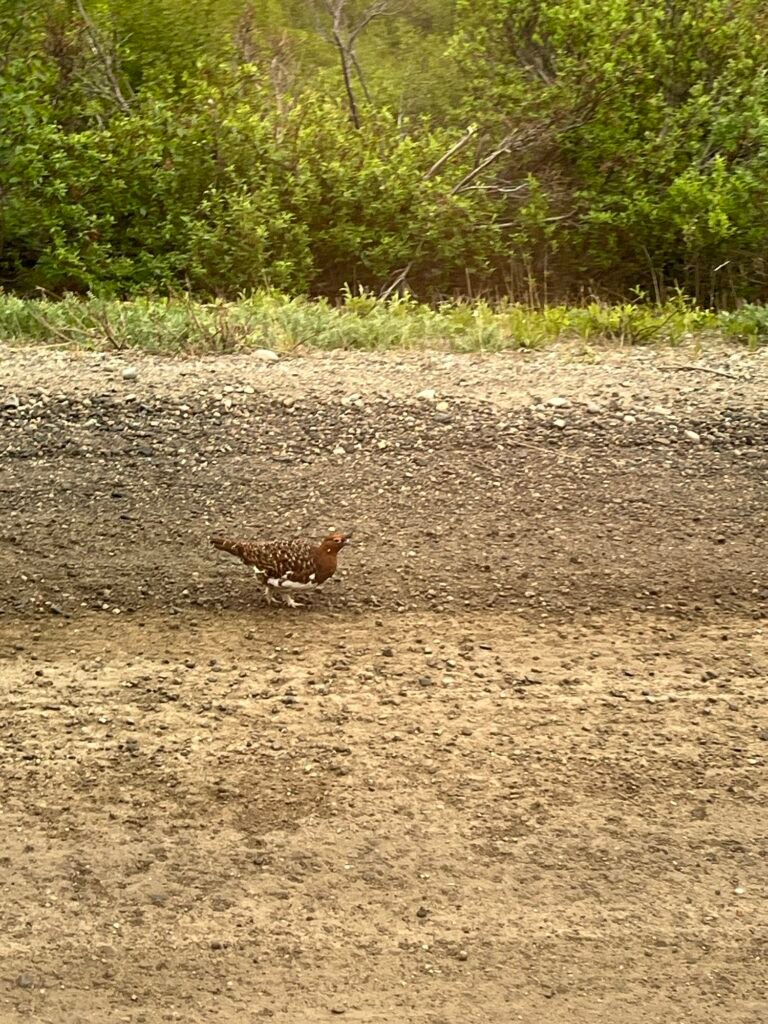
Fauna spotted today: one moose, about a half dozen trumpeter swans, and an osprey with a flying fish heading out for dinner.

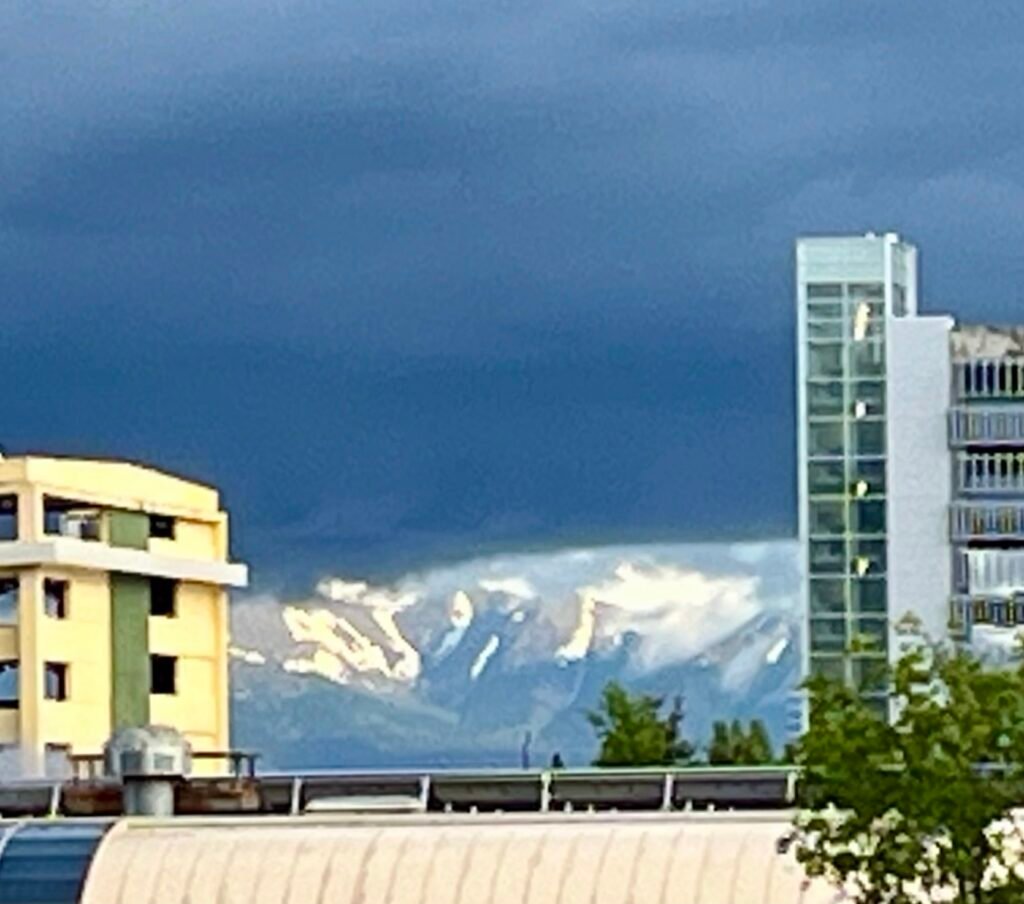
Clouds pulling a curtain down on the mountains. Sunset is an hour earlier, at 11:36pm. What a difference three degrees of latitude makes. G’night, Anchorage!

June 11th travel: 230 miles by rail from Denali NP to Anchorage.