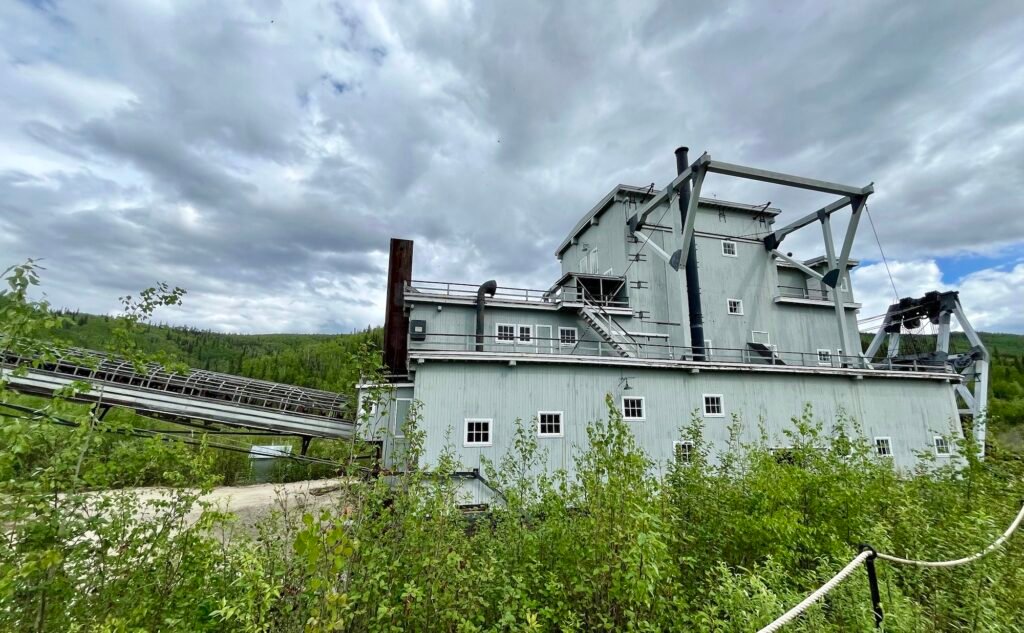
This afternoon’s excursion took us on an abandoned gold dredge tour. The pic doesn’t begin to show just how massive this old beast is. It’s the largest dredge of its kind in North America, built for the Canadian Klondike Mining Company. Number 4 was in continuous operation except for most winters and a few brief times for major maintenance, from 1913 until 1959.
Standing at 60 feet and set on a wood barge, #4 was built on land, then floated by water from ditches dug from nearby streams to the site. The whole rig was set in motion by large electric motors, and powered by hydroelectric dams up to 30 miles away.
Our park service guide noted that the dredge was so noisy, with 18,000 cubic yards of rocks tumbling through it in a day, that workers inside were left nearly stone deaf. It could be heard up to 10 miles away. It also razed the land, leaving long piles of rocks in its wake.
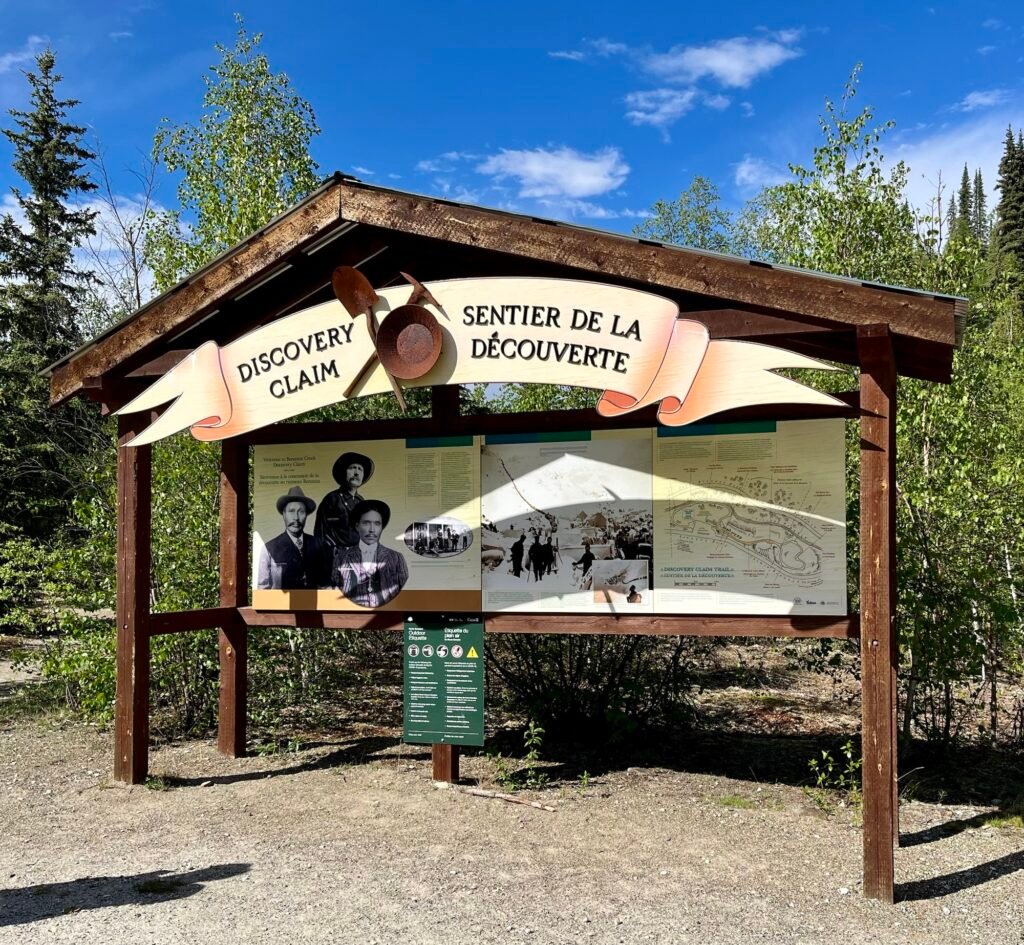
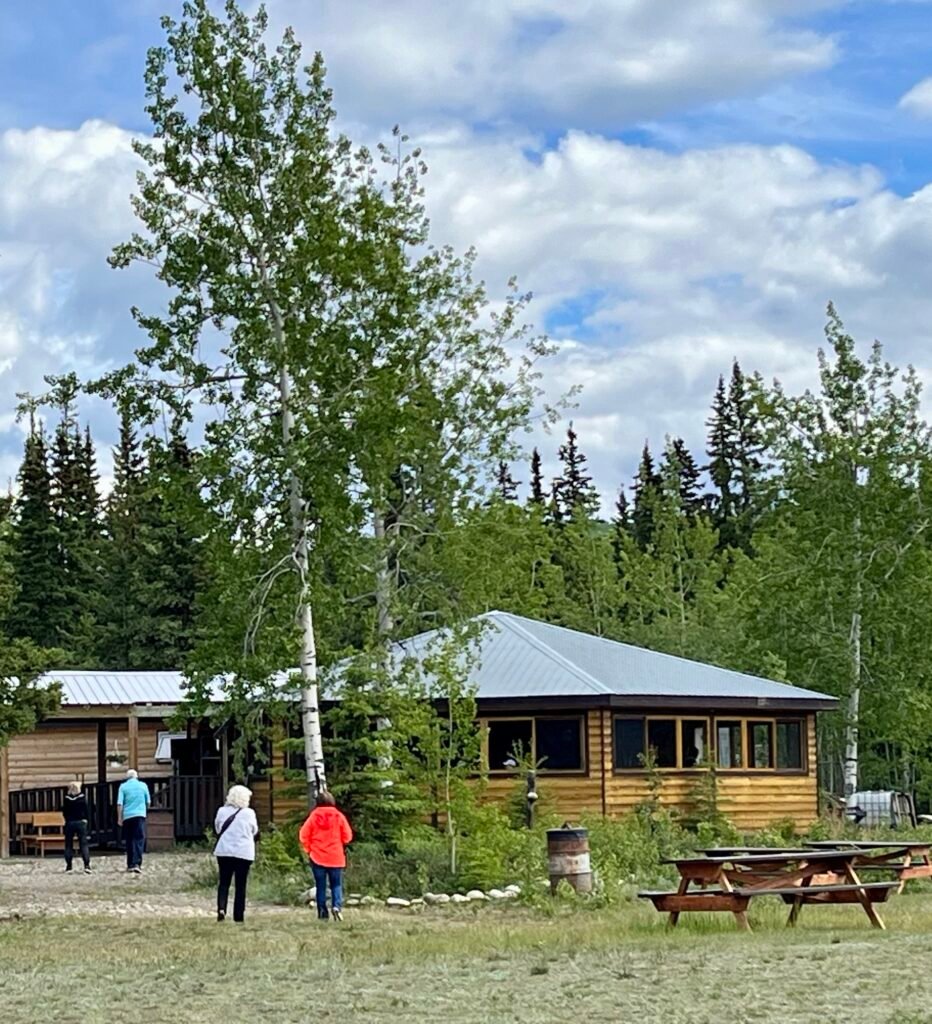
Canada Parks welcome sign at George Carmack’s (remember George?) Discovery Claim, that ignited the gold rush.
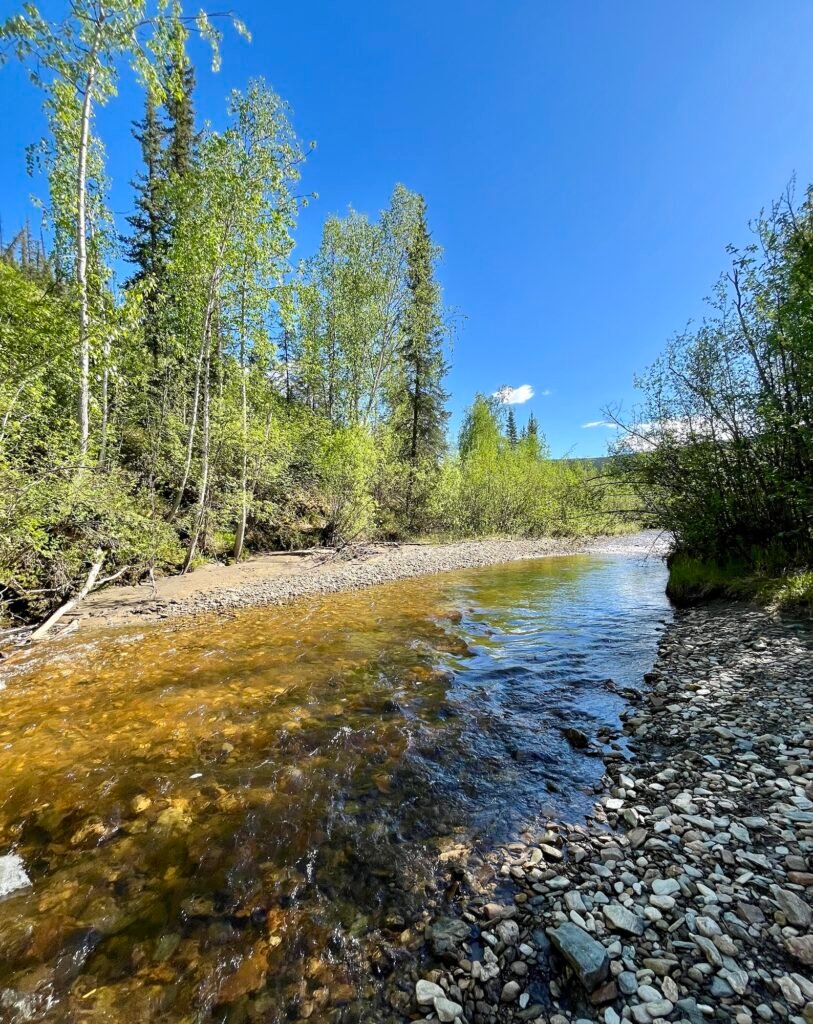
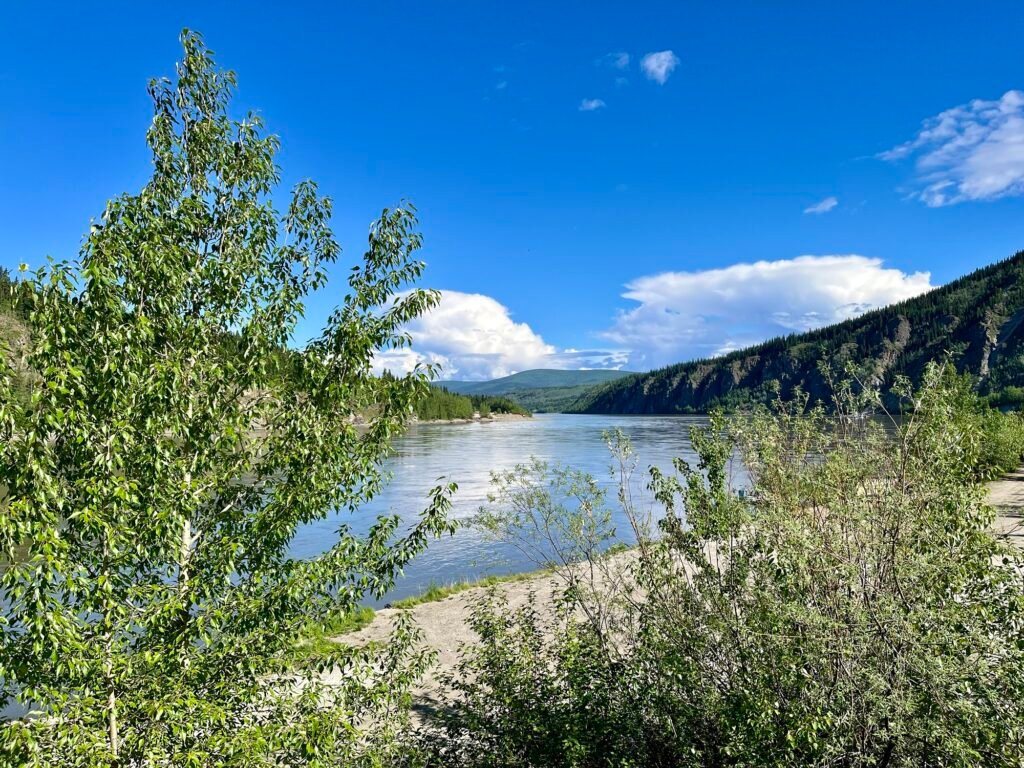
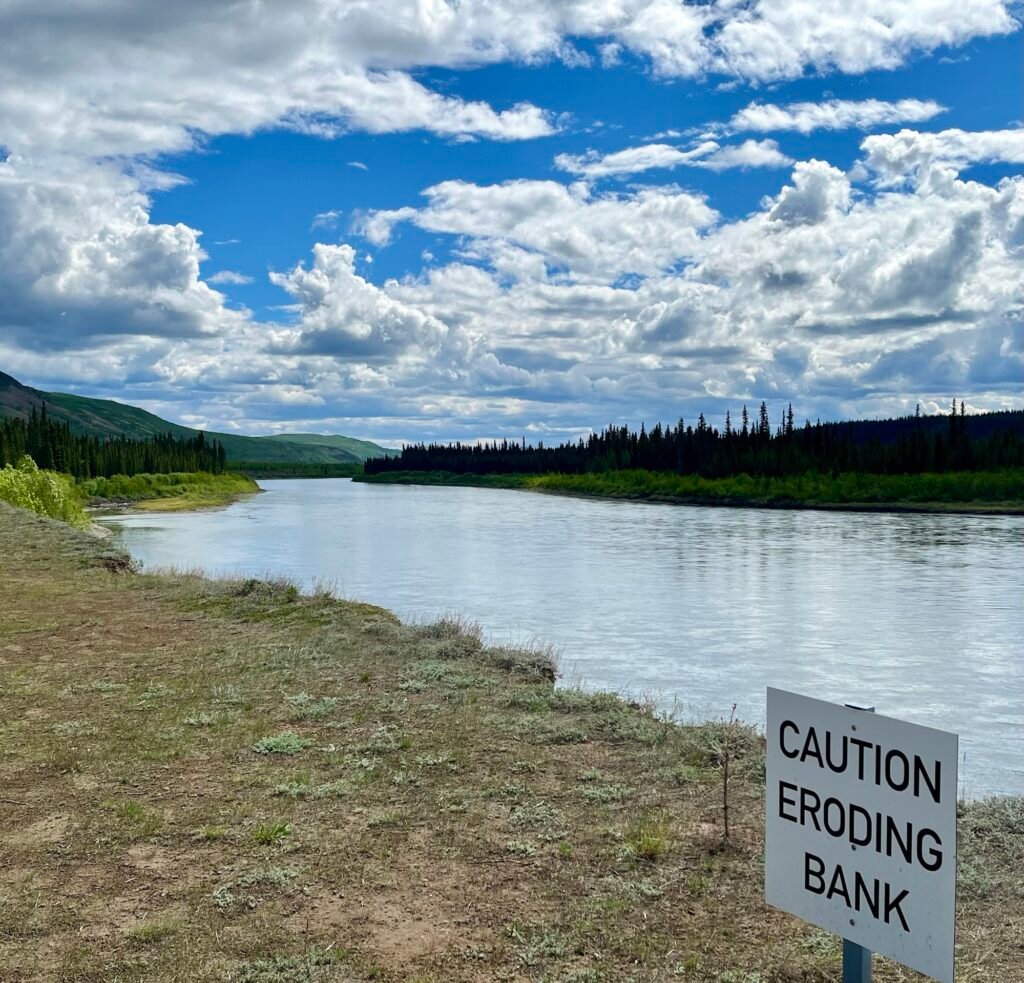
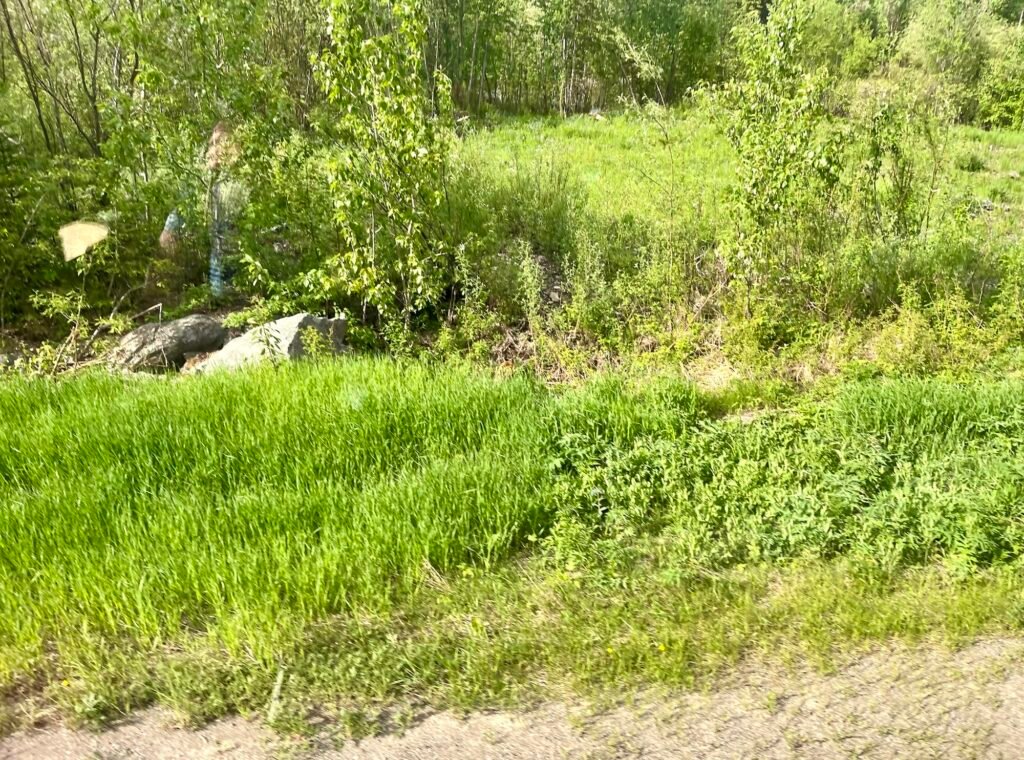
This stream is a short walk from the welcome sign. So this pristine stream is where it all began? And it’s been preserved? Amazing!
Knowing that the dredge miners had been all over every obvious place that might be hiding the yellow stuff, I asked a guide why hadn’t the stream where it started been dredged? Oh, that stream was dredged. This stream is on the claim site but not the stream where Carmack and company found gold.