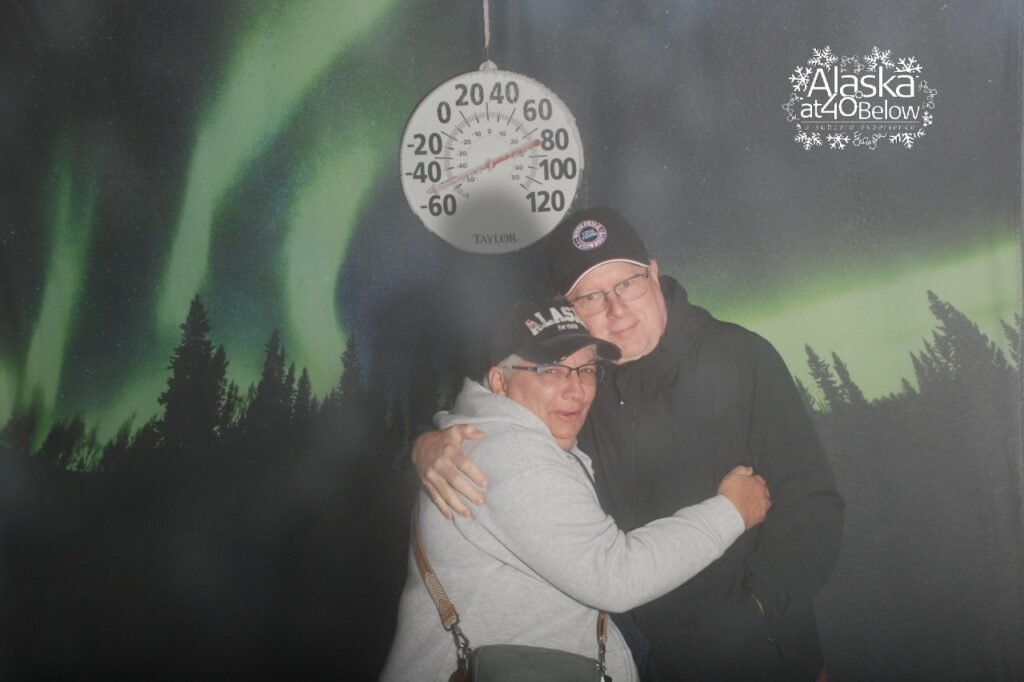
Anchorage Trolley Tour

Keeping things light today, with a two hour trolley tour around the Anchorage area.
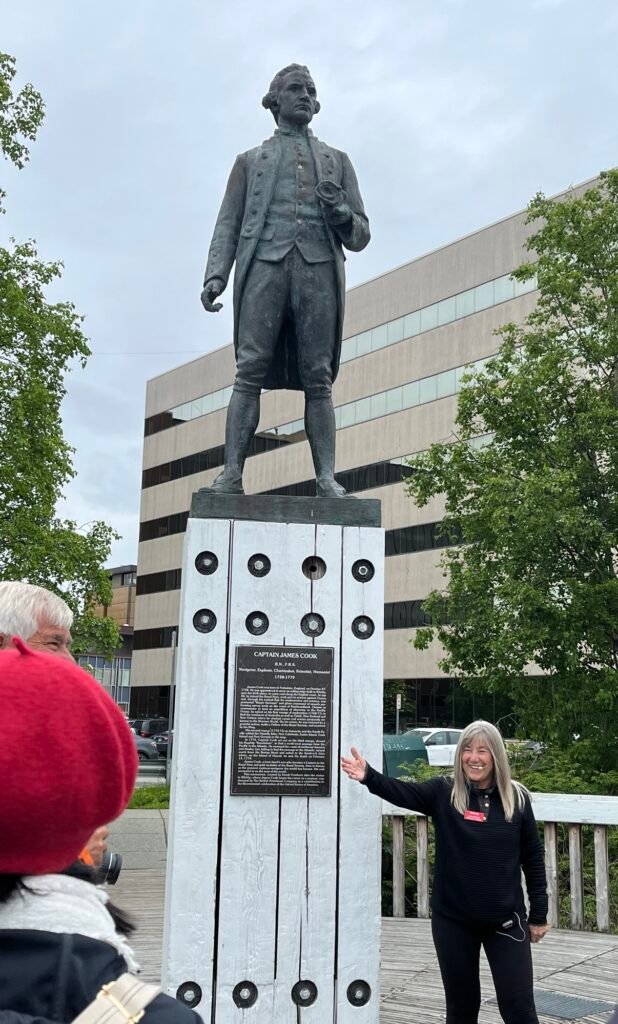
Blessed once again with a retired teacher as our tour guide and driver, Donna has at least 17 years (that we can figure) of experience educating visitors about Anchorage. She’s a storehouse of the region’s history and a great storyteller.

We’re at Captain James Cook Monument. In 1778, this chapter of the great explorer’s adventures had he and his crew looking for the Northwest Passage between the Pacific and Atlantic oceans. They didn’t find it, but the 180 mile long Cook Inlet now bears his name.
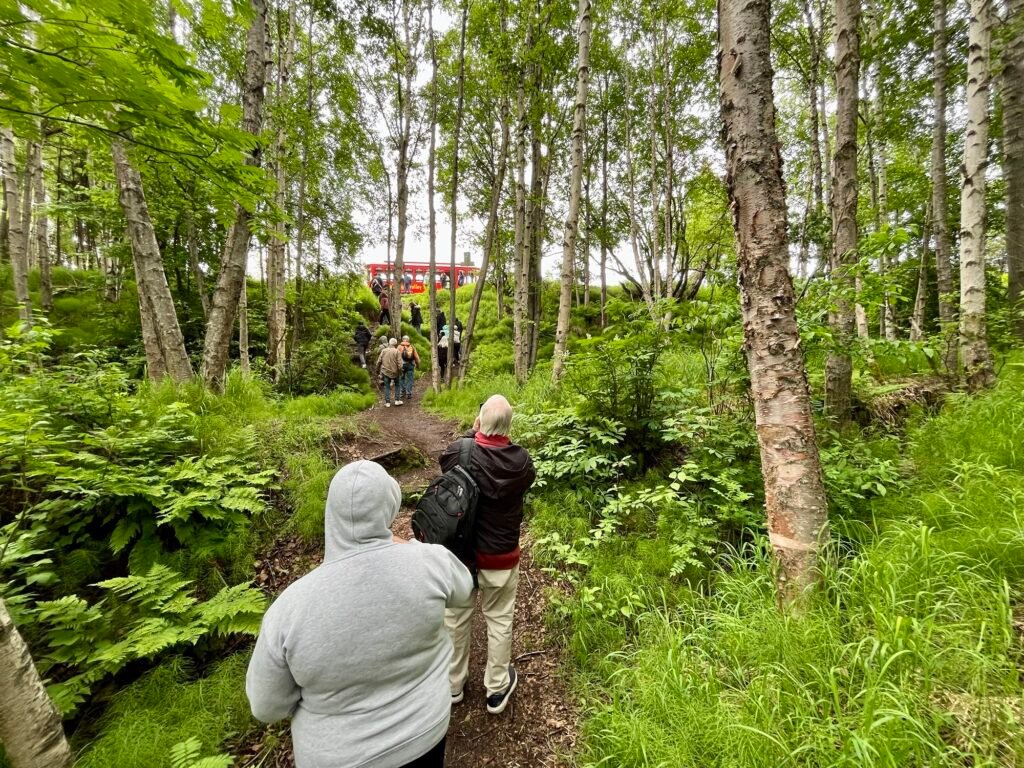
At 5:36pm on Good Friday, March 27th 1964, an earthquake hit Anchorage. Estimated at magnitude 9.2 when it let go, about 600 miles of the underlying fault released 500 years of stored energy. It was the second most powerful quake since modern seismology was developed.

As the nearly 5 minutes of ground/shock waves hammered the region, large areas of land “liquified”, literally sinking whole neighborhoods. We’re standing in one such area in this pic, now about 20 feet below street level. Prior to the quake, there was a large field of grain at the head of the Knik Arm. After, the entire area had liquified and sank, no longer usable farmland.
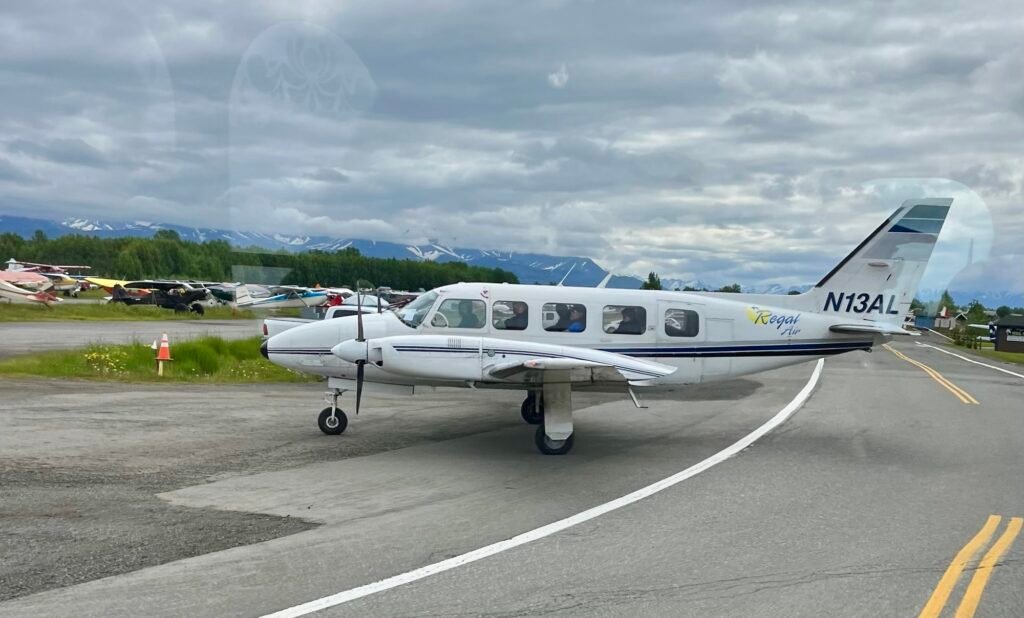
Paraphrasing Buzz Lightyear: Planes! Planes everywhere! General aviation is big here. We’re at Lake Spenard, adjacent to the international airport. Venturing a guess, I’d estimate several hundred small planes are parked here, on land and in boat plane slips.
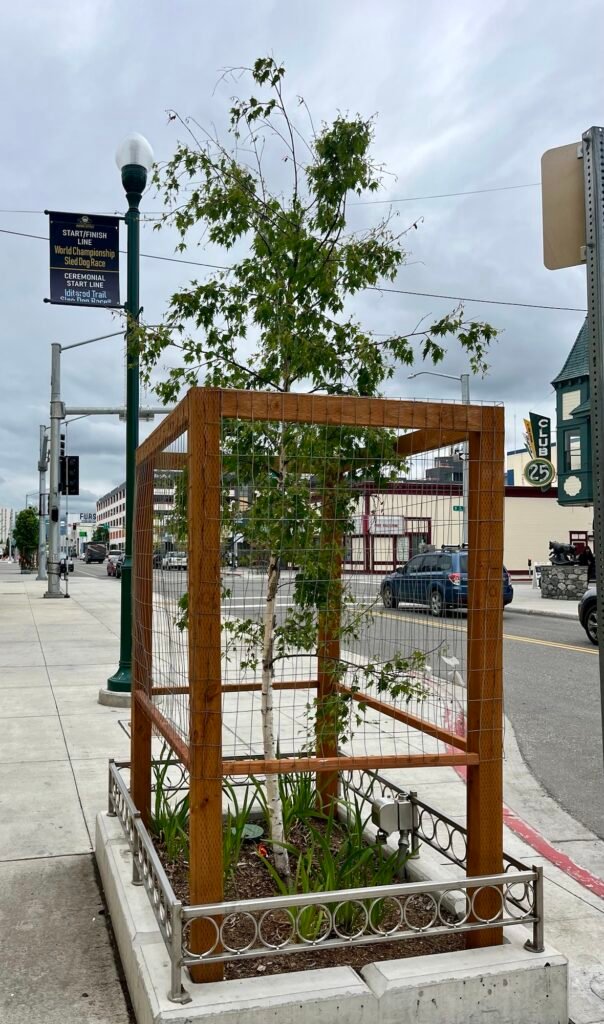
Moosance! In winter, the moose diet leans towards willow trees. They’ll eat the bark from large willows, but devour small trees like this all the way to a stump, wherever they can be found. Like in the city. So, the city builds these cages to discourage grazing there.
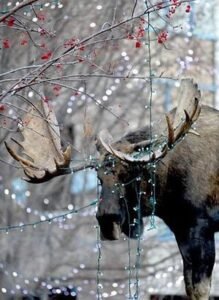
Bruce, photo from The Seattle Times

Moose are part of life throughout Alaska. In the early 2000’s, a moose named Bruce frequented resident’s yards in the winter months looking for crab apples, and occasionally left with souvenirs like kid’s swings and Christmas lights tangled in his antlers.

The thing about the crab apples was that by then they had become fermented. So, yeah, like moose aren’t unpredictable enough when they’re sober. Residents even had a website where they tracked this tipsy moose in real time, to predict where he’d show up next. By then, Bruce had a well-earned nickname: Buzzwinkle.
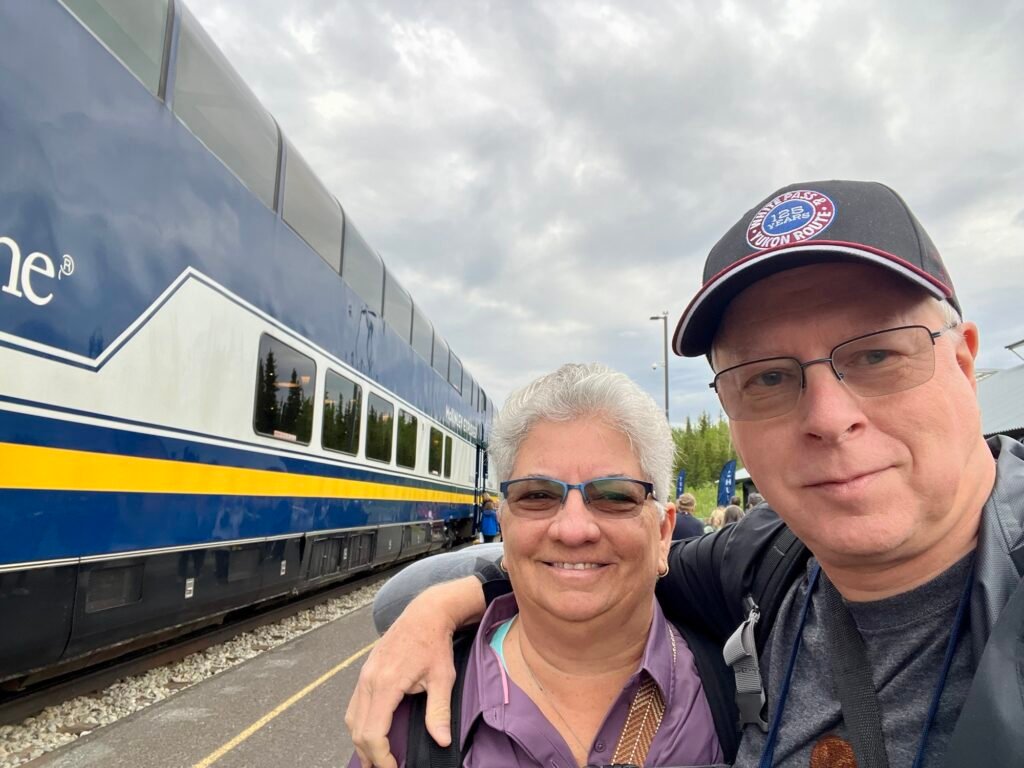
Alaska Railroad

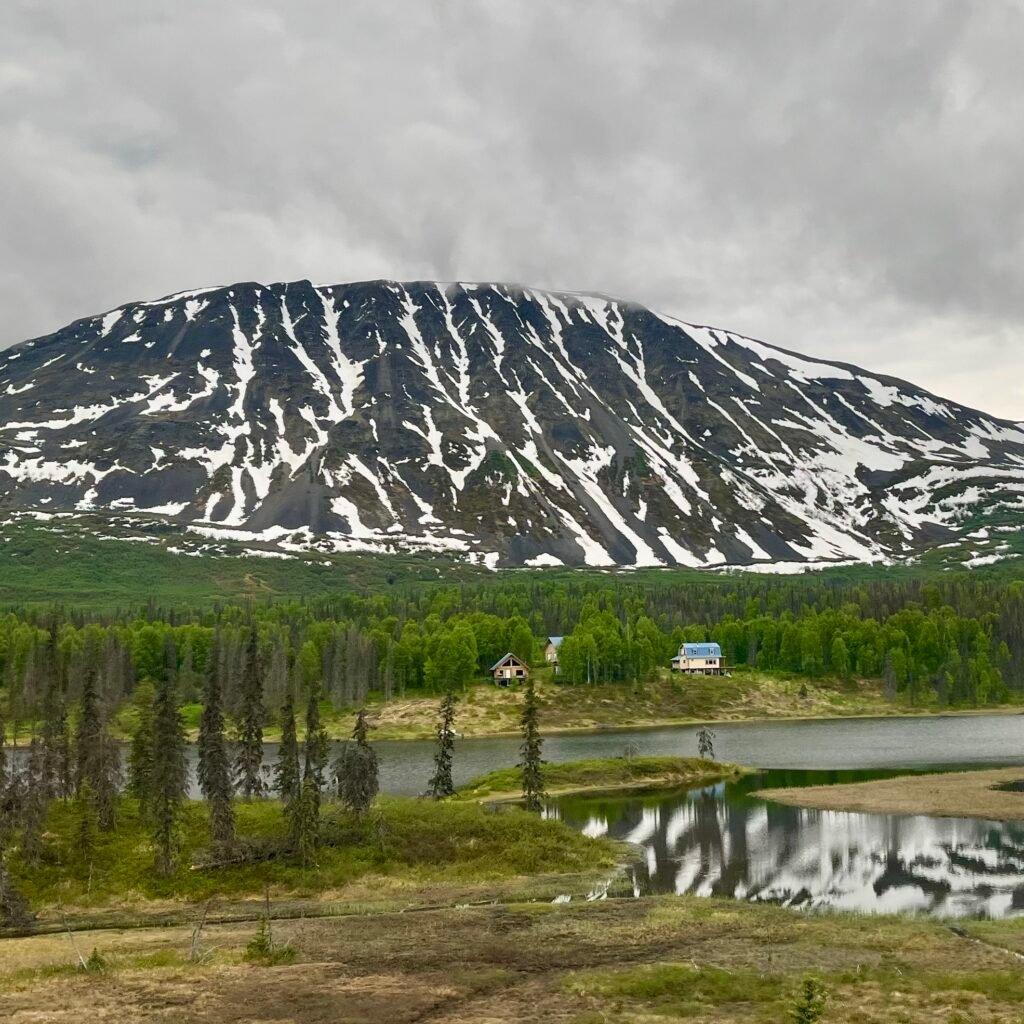
Today is the last day of our guided tour, aboard an Alaska Railroad dining/observation car. This is a nine hour ride from the station in Denali National Park to Anchorage.

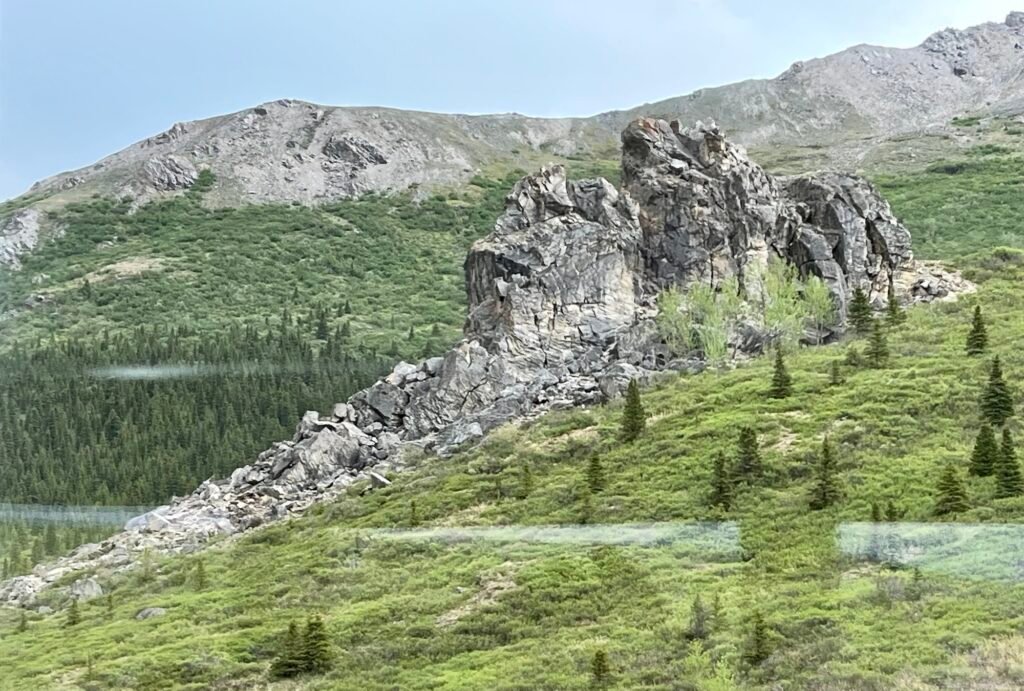
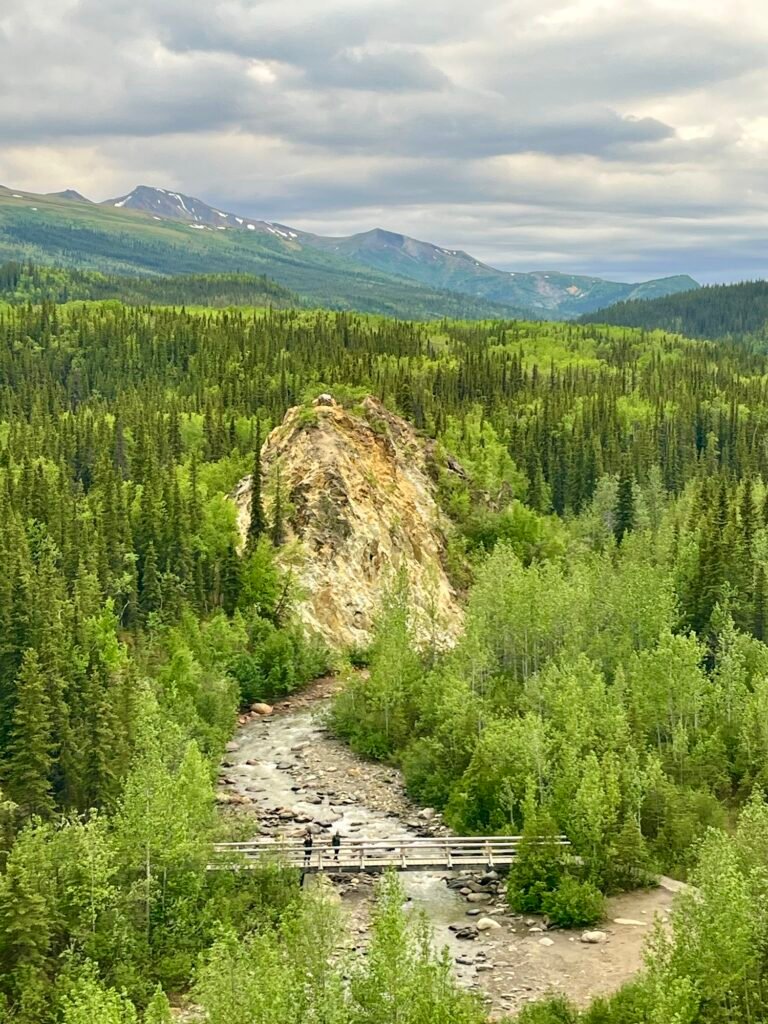
Like yesterday’s views, the landscape is peppered with head-scratching out-of-place outcroppings.

Starting in essentially the same area as yesterday’s tundra tour,

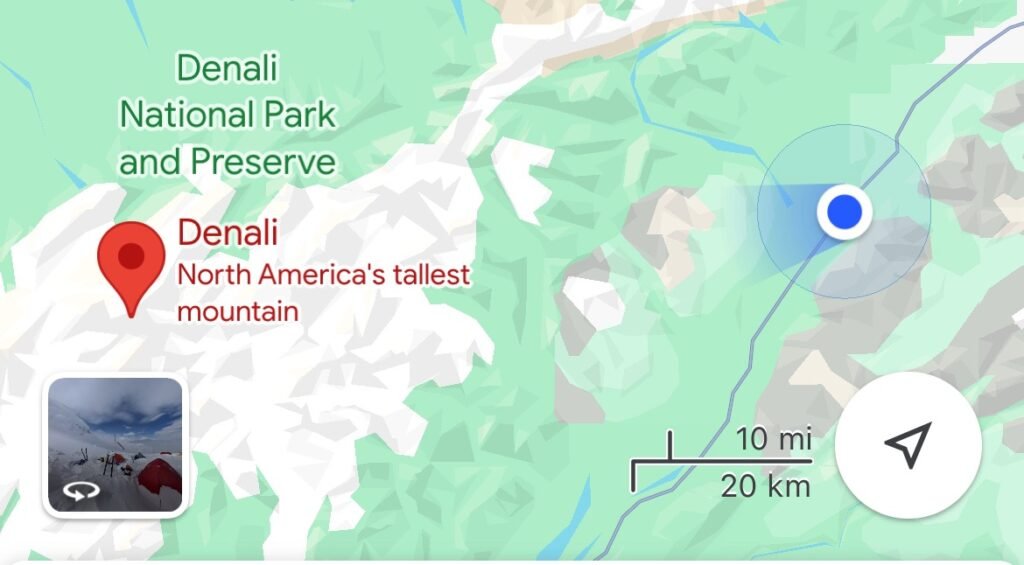
we were hopeful for a Denali sighting as the route would pass about 30 miles to the east.

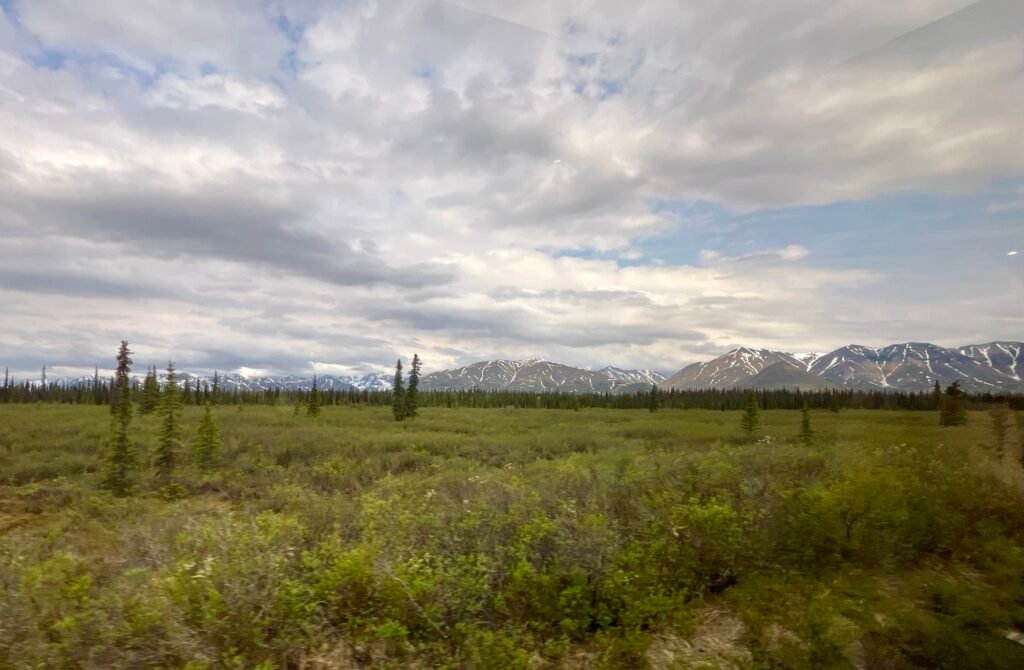
Alas, not today. For something so massive, Denali is quite shy. Still, the views never disappoint.

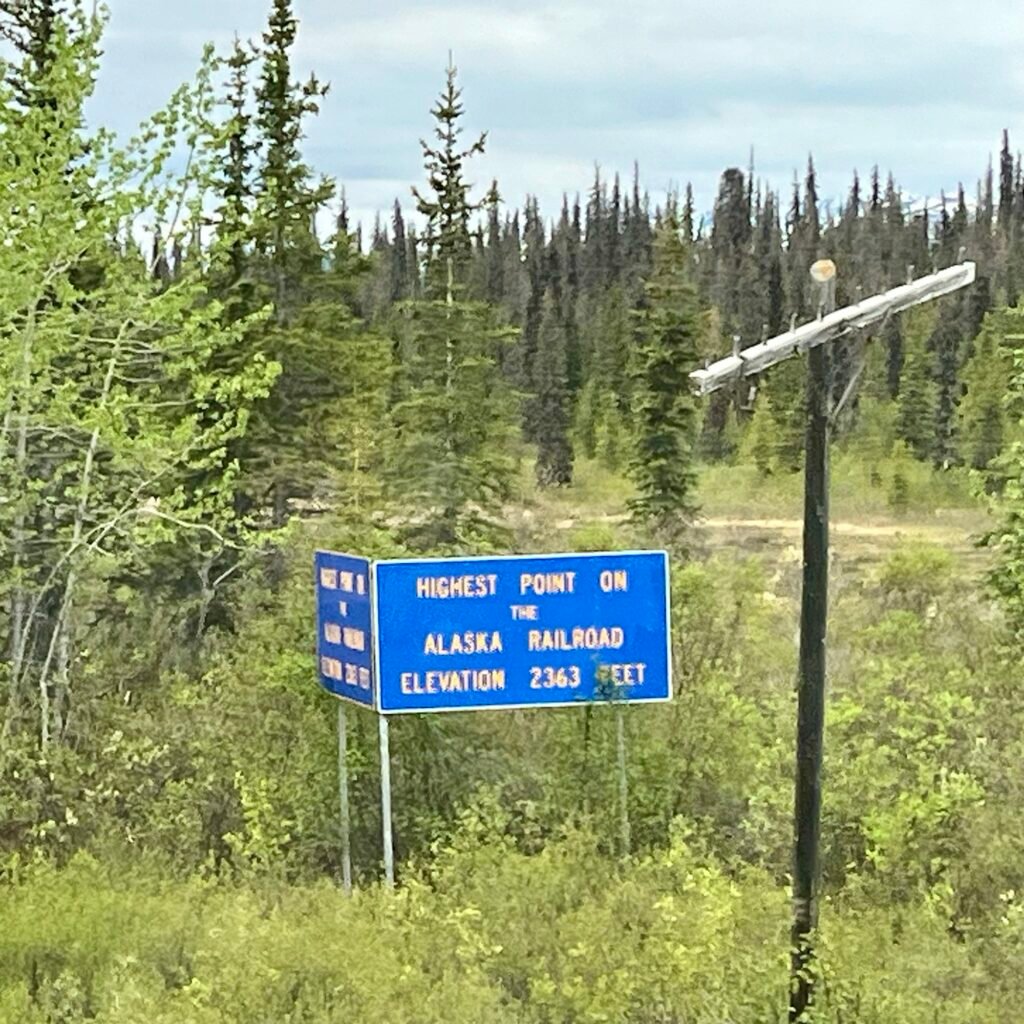
Like the sign says.

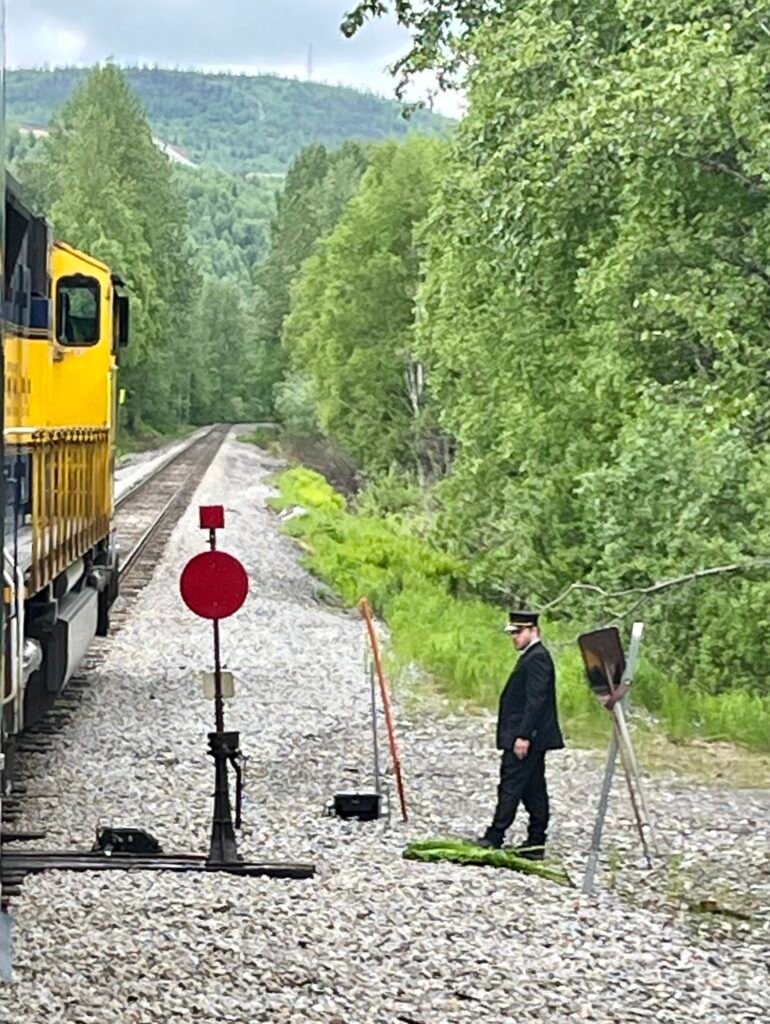
Switchgear in remote areas are manual, not electric. Sometimes in the winter months, the conductor has to use a sledgehammer to clear ice from a switch so it can be flipped.

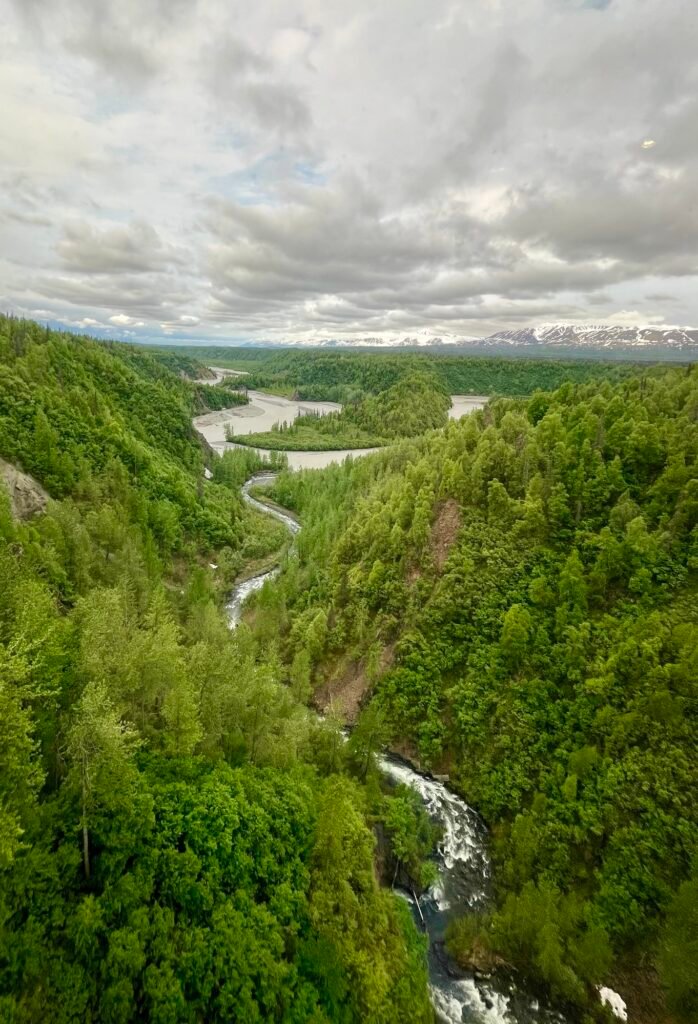
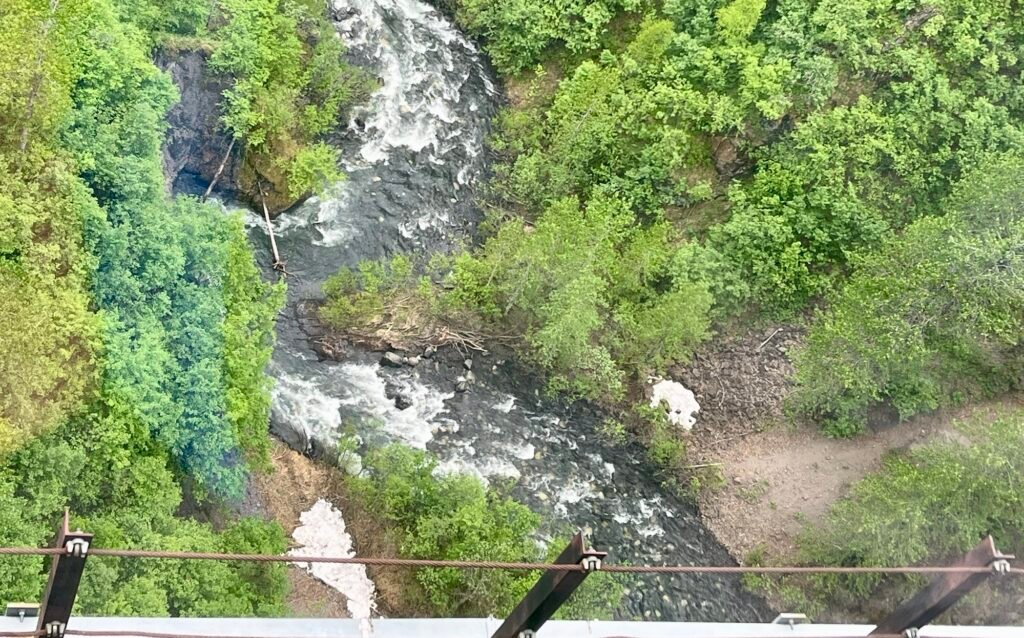
View from the 918’ long Hurricane Gulch Bridge, constructed in 1921 over a mere 90 days. Where our train stopped. For ten minutes. 296 feet above Hurricane Creek.

Did I mention that all 7 cars plus locomotive stopped on this 103 year old bridge 296 feet above the gulch floor for ten minutes? I overheard several pleas of “okay, we need to move now.”

Big Lake. No, really, that’s the lake’s name.

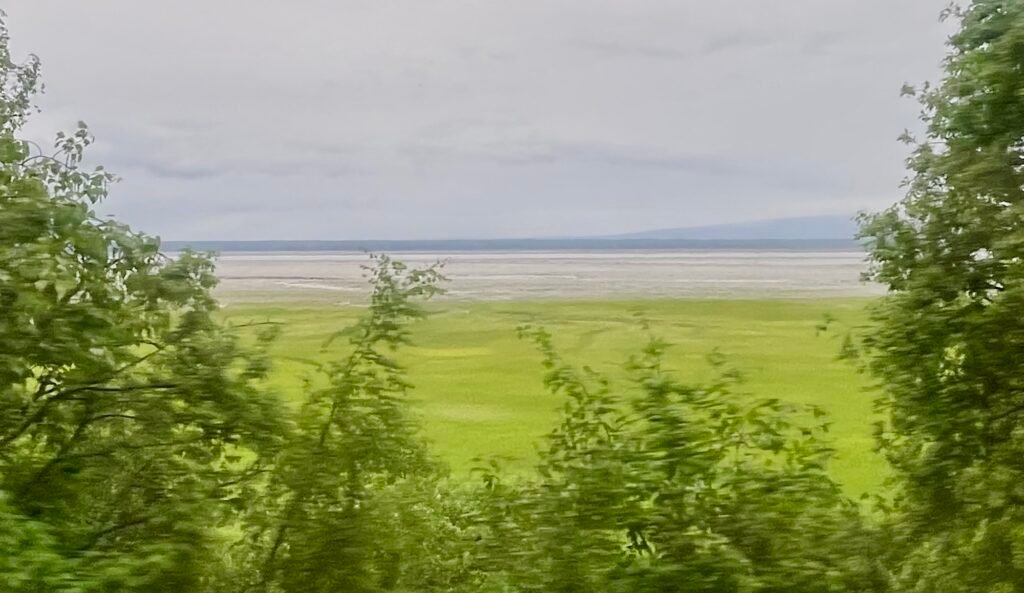
About 20 miles north of Anchorage, looking across the Knik Arm of Cook Inlet. The mile or so swath of grass and sand between the trees in the foreground and water way out there seems like a nice beach.

Except, that’s not sand. It’s all silt from glacier runoff, at least 600 feet deep. This silt is finer than talcum powder and more dangerous than quicksand when wet. It can be walked on when the tide is out and it’s dry.

Head for the hills when the water rises, though, because that beach becomes a trap. The advice is, if you’re in up to your ankles, get help fast, because there’s no way you’ll get out by yourself. Do it fast because the average tides are 26 feet.

Fauna spotted today: one moose, about a half dozen trumpeter swans, and an osprey with a flying fish heading out for dinner.

Clouds pulling a curtain down on the mountains. Sunset is an hour earlier, at 11:36pm. What a difference three degrees of latitude makes. G’night, Anchorage!

June 11th travel: 230 miles by rail from Denali NP to Anchorage.

Denali National Park

Today we went on a Denali tundra wilderness excursion. The industrial strength school bus took us 42 miles south on Park Rd. No farther because of reconstruction where a landslide made the road unsafe. Not a landslide exactly, but an area of moving rock and ice, a rock glacier.

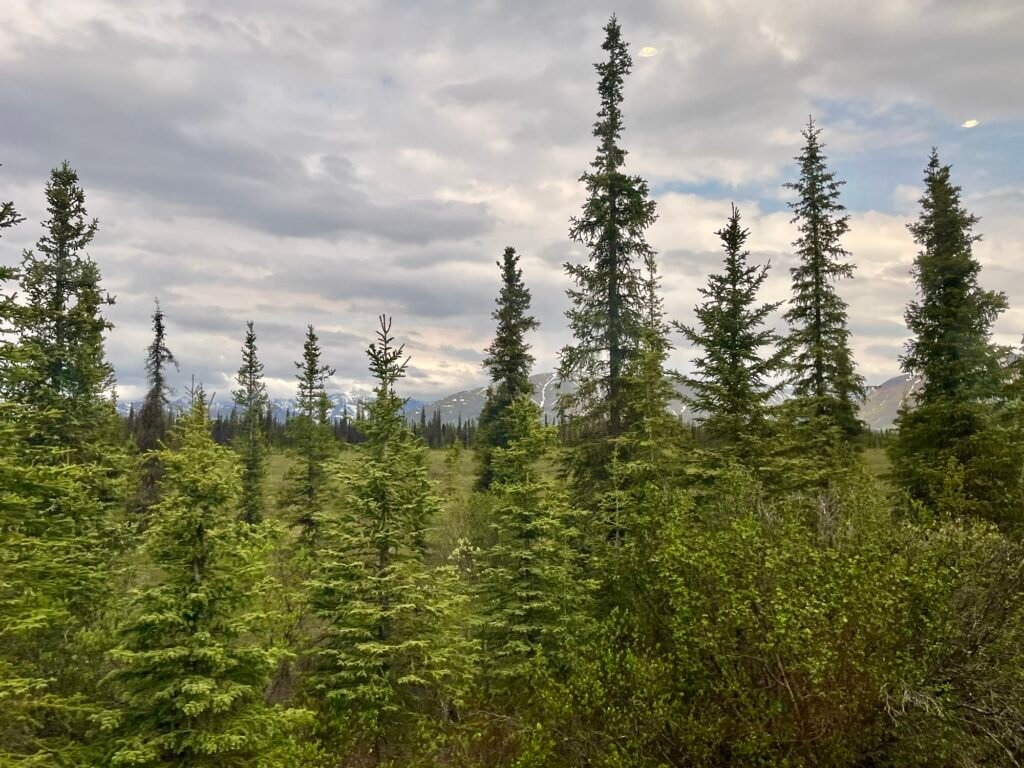
The terrain ranged from forested areas in lower altitudes to tundra, mostly low ground cover and various shrubs but sparse trees.

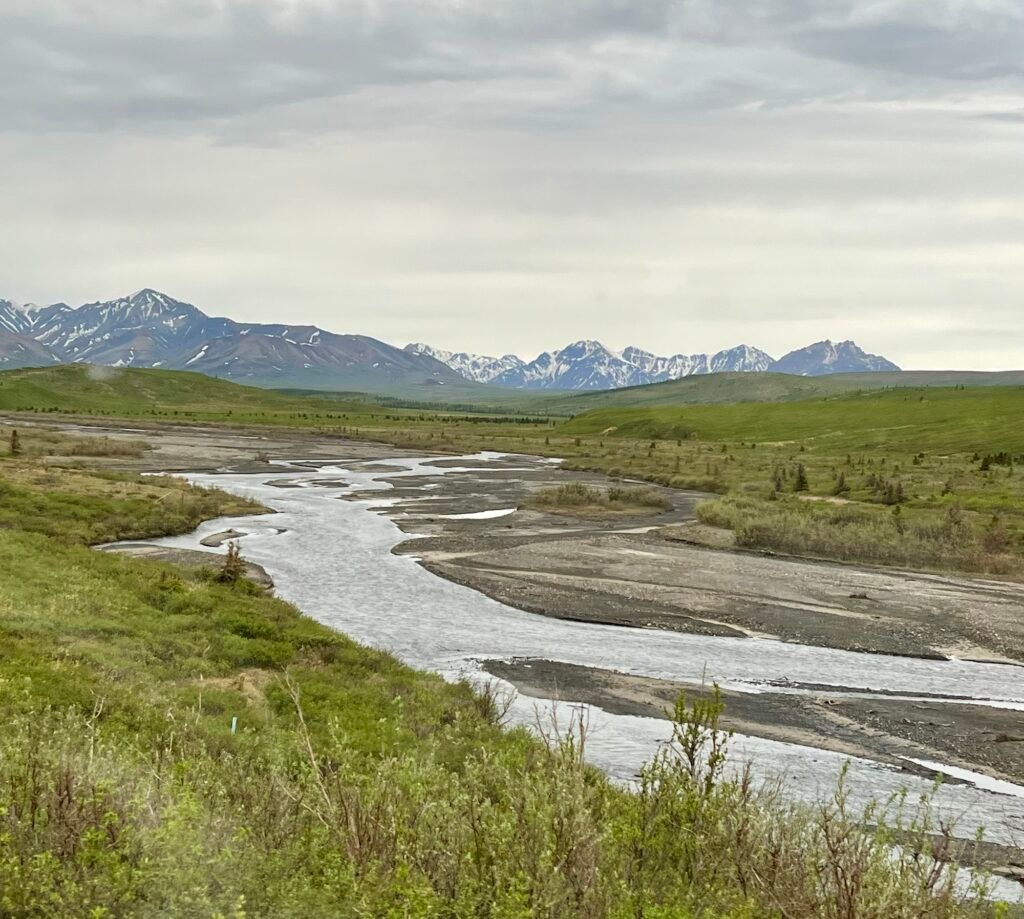
“Braided” rivers like this cross the landscape. Fed from snow and glacier run off, this one is really near the peak of its volume. They never fill that rocky area. This one was occupied by a glacier for millennia, but it was completely melted several decades ago.

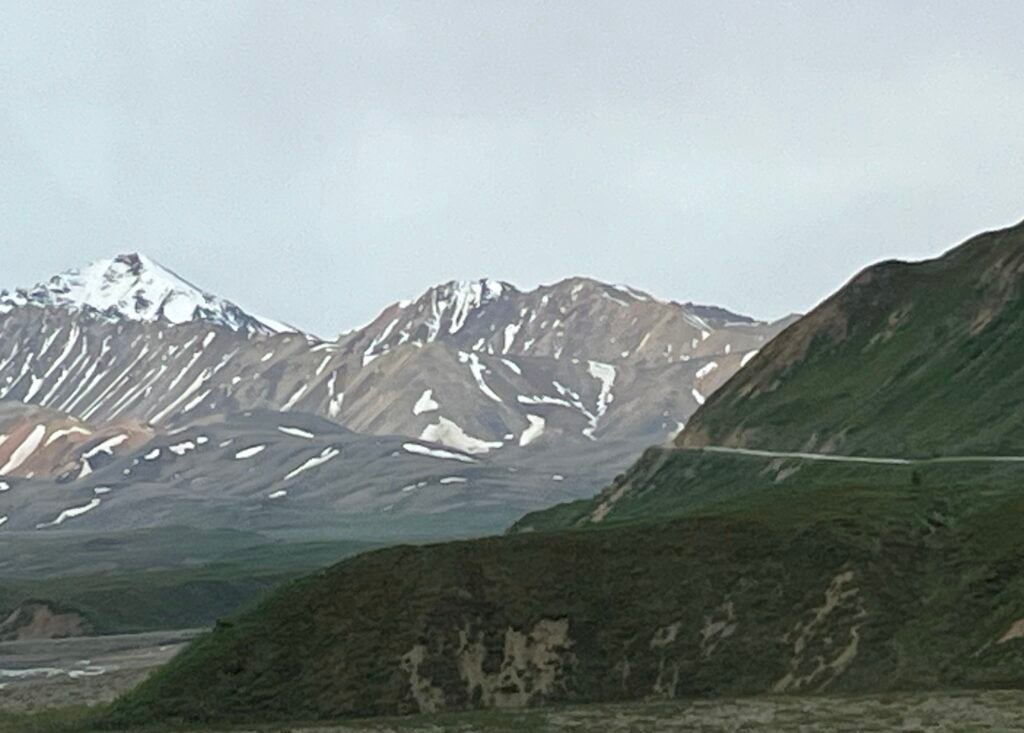
The line across the mountain on the right is Park Rd. The V between the near and distant ranges is where one would see Denali, absolutely towering over the closer mountains. On a clear day. Today was not one of those days.

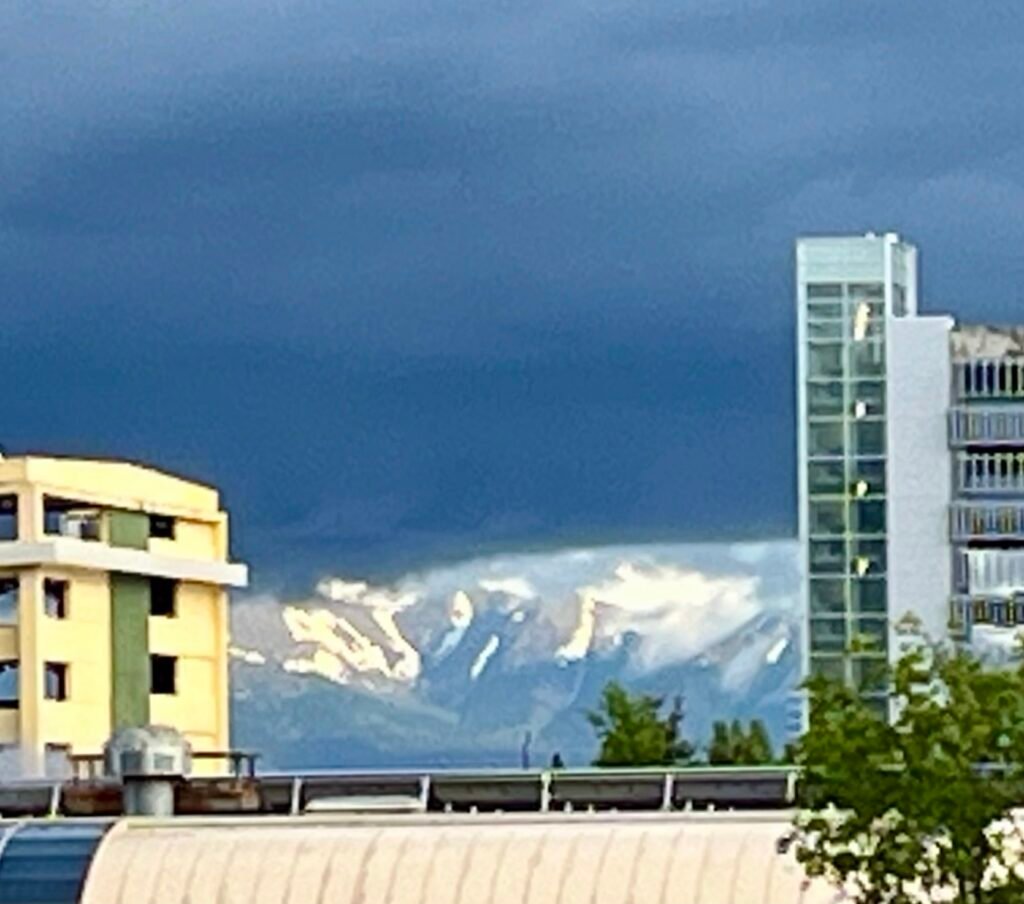
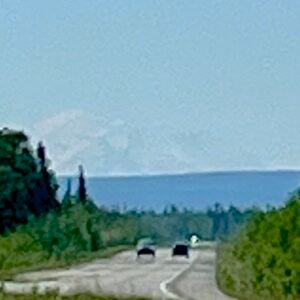
On our way in to the Denali area yesterday, we did get a glimpse of the mountain. This pic is from about 100 miles out. Even this far away it dwarfs all the ranges before it. Crazy, huh?

The geology here fascinates me.

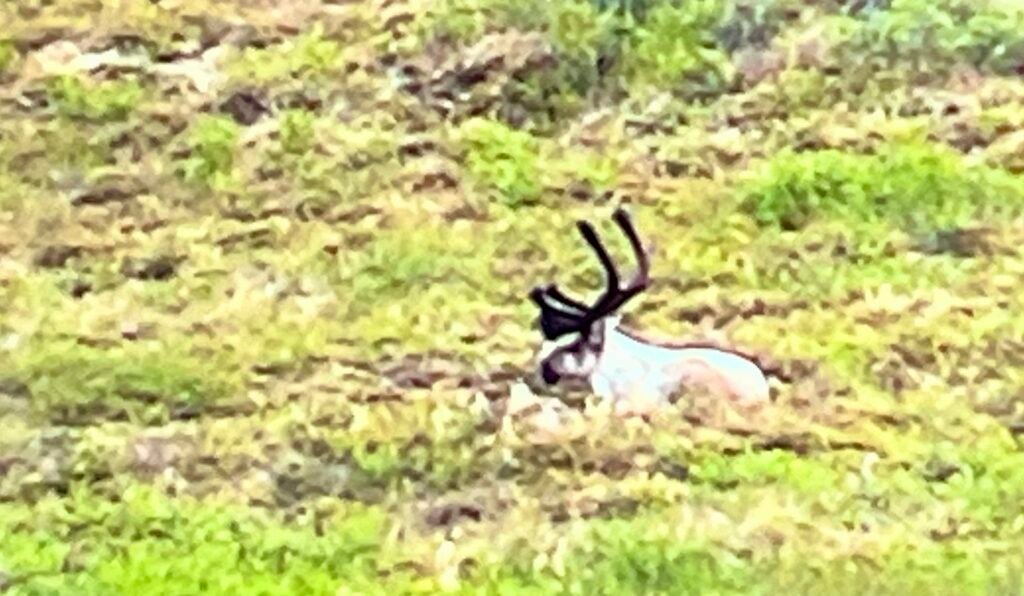
Wildlife seen: caribou. Full disclosure: this was maybe a quarter mile away. We did not have a camera with a telephoto lens. The bus has screens fed from a video camera the tour guide uses to zoom way in to sightings. “Stop! Something at nine o’clock!”

Gets you up close and personal.

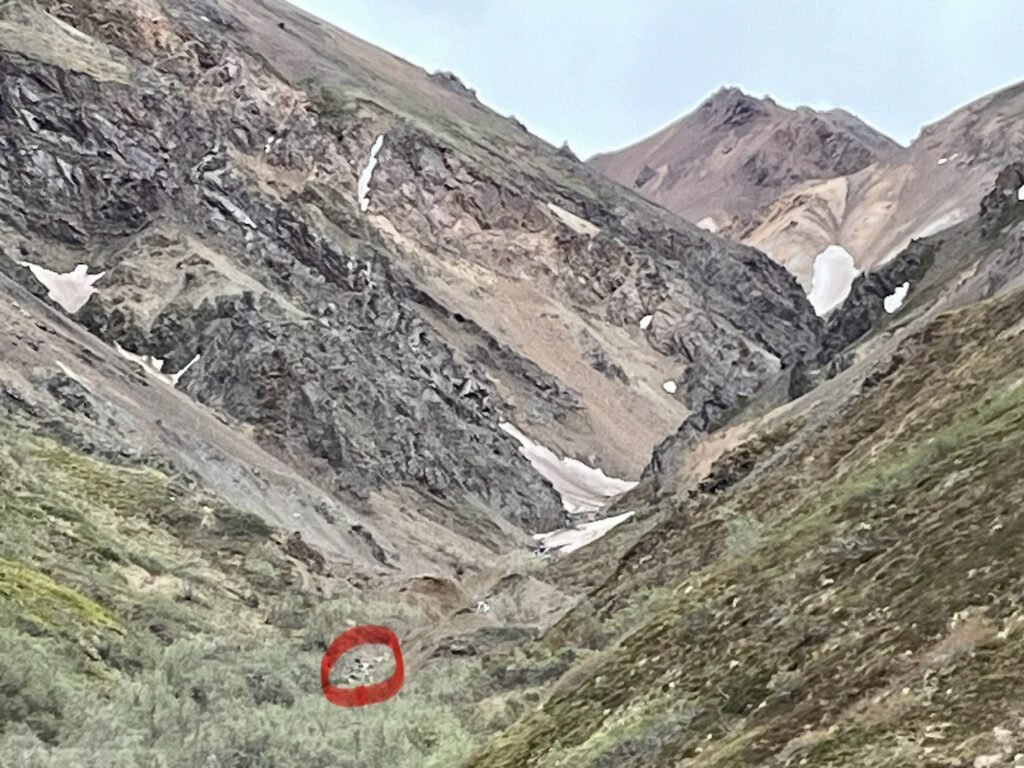
Momma grizzly and cubs about a half mile away. Just dots moving around the mountainside to the unaided eye.

Also spotted were one moose, many Dall sheep, ravens in a nest built under a bridge, red and Arctic ground squirrels. Oh, and mosquitoes.

Hats off to our tour guide/bus driver, Nan. Super knowledgeable about the park’s flora and fauna, she’s a retired school teacher from Texas. Obviously a teacher at heart, when a guest had a question about a shrub growing on the side of the road, Nan said “well, come on!”, brought her over to said plant and answered all her questions. Gotta love true educators with that kind of passion, even in retirement.

Small World

For dinner last night, we went to a pizza joint a short walk from the hotel. Sitting at the adjacent bar, enjoying our conveyor belt pizza (it was actually better than I make it sound,) when we overheard another couple talking about how this is not a good New Jersey pie.

Two guys at the bar join in, with the same lament. We, of course, chimed in. Pork roll, not Taylor Ham, was also brought up.

What are the odds that in a little bar 4,300 miles from New Jersey, in the interior of Alaska, 6 of the 7 occupants came from the Garden State?